
How to Choose CBD Products? The Complete Guide
In short
- Identify specific needs to adjust dosage
- Prioritize products with certificates of analysis and THC < 0.3%
- Choose a consumption method based on desired bioavailability
- Verify the origin and extraction method of cannabinoids
To choose the right CBD product, you must first identify your personal needs and understand the specifics of this molecule. CBD, or cannabidiol, is a natural compound derived from the hemp plant, distinct from THC due to its non-psychoactive effects. In France, where the CBD market is experiencing steady growth, nearly 10 million people have already tried these products, often for their relaxing or anti-inflammatory properties.
However, not all products are created equal: some contain contaminants or variable CBD concentrations, making an informed choice essential. To avoid risks, prioritize certified products with a THC content below 0.3% and accessible laboratory tests. Finally, the method of consumption—oils, capsules, creams, or flowers—influences bioavailability and the intensity of the effects, which is why it is important to tailor your selection to your daily usage.
Before starting, it is crucial to distinguish legal CBD products from other cannabis derivatives. In Europe, only those derived from hemp varieties with low THC content are authorized, provided they meet strict standards. Users often look for solutions to manage stress, pain, or sleep, but dosages and forms vary significantly between brands.
CBD oil, for example, offers rapid absorption, while capsules allow for precise dosing. To guarantee product quality, always check for a Certificate of Analysis (COA) and the origin of the plants, as these criteria determine the efficacy and safety of the compound you consume.
Understanding the basics to choose your CBD products
To understand what CBD is and where it comes from, you have to look at the hemp plant from which it is extracted. Hemp and cannabis belong to the same botanical species, Cannabis sativa, but CBD, like THC, are molecules with radically different effects.
Unlike THC, CBD does not cause psychoactive effects and is legal in Europe, provided it respects a maximum THC threshold—set at 0.3% for commercialized products. This distinction is fundamental for consumers because it determines not only legality but also usage expectations: relaxation, pain relief, or general wellness support.
One might wonder why CBD has become so popular in France despite its regulated use. Data shows that more than 10% of the French population has tried a CBD-based product, with regular consumption among 5% of them, representing approximately 10 million people.
This success is explained by a growing demand for natural alternatives to traditional medications, particularly among men aged 35 to 60. Furthermore, 78% of consumers prefer organic products, reflecting an increased sensitivity to the quality and origin of the compounds used. This trend illustrates an expanding market where transparency and traceability have become essential criteria.
The different types of CBD products available
There are many different types of CBD products on the market, each suited to different uses or preferences. Consumers can opt for various forms, ranging from classics like flowers or oils to more innovative alternatives such as capsules, creams, or infusions.
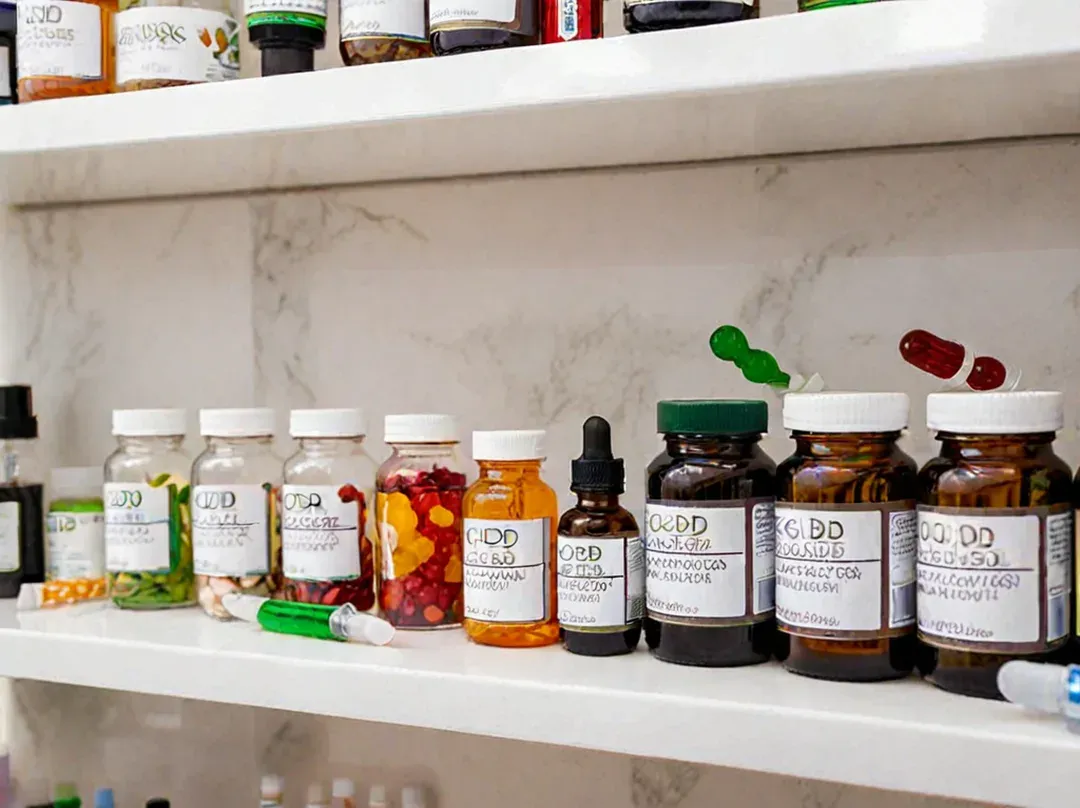
This diversity meets various personal needs, whether seeking fast-acting effects, convenience, or specific targeting (pain, relaxation, etc.). An informed choice will therefore depend on both the desired CBD product and the preferred method of administration.
- CBD flowers for a natural experience
- CBD oils for precise dosing
- Capsules and pills for convenience
- Cosmetics for topical use
- Infusions for a moment of relaxation
Among the most popular products, CBD flowers stand out due to their accessibility and price. In France, they are offered starting from €2 per gram for bulk purchases exceeding 25 grams, while smaller 3g or 4g packs carry a higher average price. This option attracts users looking for a natural feel and direct consumption, often associated with inhalation rituals.
Conversely, CBD oils dominate the market in terms of concentration and versatility. Available from €15 per vial (for 10 ml), they cover a wide range of dosages, from 25 mg to 3,000 mg, with price ranges varying from €25 to €180 depending on purity and quantity. Their popularity stems from their ease of use, whether taken sublingually or integrated into culinary recipes.
How to Choose the Right CBD Product for Your Needs?
Knowing how to choose the right CBD product for your needs is essential to getting the most benefit. Cannabidiol acts differently depending on the form and dosage, and its effectiveness directly depends on your goal: occasional relief, stress management, or long-term support.
For example, a CBD oil will be better suited for prolonged action, while a flower or a vaporizer offers faster effects. Before making a purchase, it is crucial to identify your personal needs and desired onset of action, as these criteria directly guide an informed choice toward the most suitable product.
Choosing the right form of CBD
It is helpful to choose the right form of CBD based on your expectations, as each consumption method influences bioavailability and the duration of effects. For instance, sublingual administration (via oil or capsules) allows for optimal absorption in 15 to 45 minutes, with a bioavailability of 13 to 35% and lasting effects of 4 to 6 hours.
In contrast, vaporization acts within 5 to 10 minutes, offering a bioavailability of approximately 50%, making it ideal for immediate relief. Finally, oral methods (such as creams or infusions) have a longer latency period (60 to 120 minutes) but an extended duration of action (6 to 8 hours). The market offers various solutions, and the chosen CBD product must match these criteria to guarantee optimal efficacy.
| Consumption method | Absorption time | Bioavailability | Duration of effect |
|---|---|---|---|
| Sublingual | 15-45 min | 13-35% | 4 to 6 hours |
| Oral | 60-120 min | 4-20% | 6 to 8 hours |
| Vaporization | 5-10 min | ~50% | Not specified |
| Infusion | 30-90 min | 20-30% | Not specified |
How to consume CBD flowers and how to choose?
To know how to consume CBD flowers and how to choose the best variety, you need to know the three main methods of use. A flower can be prepared as an infusion, where it is steeped in boiling water with a fat source (such as milk) to facilitate the extraction of compounds. Another option is rolling it into a cigarette, either alone or mixed with tobacco, although this method partially reduces the purity of the cannabidiol.
Finally, vaporization is the most effective way to preserve active compounds: flowers are heated at low temperatures in a dedicated device, allowing for direct inhalation without combustion. Every aspect of consumption influences the intensity and duration of the effects, highlighting the importance of selecting a plant that suits your preferences.
CBD oil: what concentration should you choose?
With so many options, people often wonder: CBD oil, what concentration should I choose? Available products on the market offer dosages ranging from 5% to 40%, which corresponds to concentrations of 500 mg to 4,000 mg of cannabidiol per 10 ml bottle. For example, a 10% oil contains 1,000 mg of CBD, while a 30% formula contains 3,000 mg.
For beginners, it is recommended to start with a moderate dosage (2 to 3 drops per dose), which is 2.5 mg to 15 mg depending on the concentration, and then adjust gradually after 1 to 2 weeks. A daily intake of 6 to 12 drops (roughly 3 doses) is often sufficient for regular use, but adjustment depends on individual tolerance and specific needs.
How to select a high-quality CBD product?
It is crucial to know how to select a high-quality CBD product to avoid risks related to non-compliant substances. In France and Europe, the legality of a product depends notably on the THC content, which must remain strictly below 0.3% (as of 2022). This threshold guarantees the absence of psychoactive effects while respecting the legal framework.
The purity of the product is also an essential criterion: high-quality CBD does not contain contaminants such as pesticides, heavy metals, or residual solvents, which are often detected through independent laboratory tests. These analyses certify compliance with health standards and strengthen user confidence. Without these guarantees, a CBD product risks losing efficacy or posing health risks, which is why it is important to prioritize brands that are transparent about their extraction methods and certifications.
You must also understand the type of CBD: isolate, Broad Spectrum, or Full Spectrum, as each offers distinct characteristics and concentrations. Full spectrum includes all the natural compounds of the hemp plant, such as other cannabinoids (CBG, CBN) and terpenes, while maintaining a THC trace below 0.3%. Broad spectrum excludes THC, preserving the other molecules to potentially amplify the Entourage Effect.
Finally, isolate comes in the form of 99% pure CBD, without any other compounds, making it suitable for people wanting to avoid any residual THC, even in minimal amounts. The choice between these three options depends on personal needs: some prefer full spectrum for a holistic effect, while others opt for isolate for a targeted approach without any risk of psychoactive effects, even indirect ones.
- Check the THC content (must be below 0.3%)
- Consult third-party certificates of analysis
- Prioritize clean extraction methods
- Ensure plant traceability
- Look for quality or organic labels
So, how to choose CBD safely?
So, how do you choose CBD without exceeding your limits? A progressive approach is the key to avoiding any discomfort, especially when starting out. The market offers products with varying concentrations, but the dosage should always be adapted to individual body mass and sensitivity. General consensus recommends not exceeding 1 mg of CBD per kilogram of body weight per day—for example, 65 mg for a 65 kg person.
Some sources even suggest a ceiling of 50 mg per day to limit risks, which is why it is important to start with gentle methods, such as low-concentration oils or capsules. This caution allows you to evaluate your tolerance without rushing, while respecting the legal and health aspects of cannabidiol.
It is important to be aware of the side effects of CBD, even though they generally remain mild and rare. Among the most reported reactions are excessive fatigue, appetite changes (either an increase or decrease), dry mouth, or gastrointestinal issues like diarrhea. More concerning are drug interactions, as CBD can alter the effectiveness of certain treatments or amplify their effects.
To minimize these risks, it is advised to consult a healthcare professional before any consumption, especially if you are already taking medication. Users should also prioritize products from independent laboratories, guaranteeing controlled purity and concentration. Finally, monitoring effects after each dose and adjusting the dosage accordingly is an integral part of making an informed and safe choice.
FAQ
What is the best CBD to choose? The best CBD depends on your needs: oil for precision, flowers for a natural experience, or capsules for convenience.
What are the best CBD products? High-quality products are those that possess third-party certificates of analysis and a THC content below 0.3%.
Which form of CBD is the most effective? Vaporization offers the highest bioavailability (~50%), followed by the sublingual route.
What is the entourage effect? It is the synergistic interaction between CBD and other plant compounds (terpenes, other cannabinoids) that amplifies the effects.
How much does a (good) CBD oil cost? Prices vary depending on concentration, ranging from about €15 for a small vial to over €180 for highly concentrated bottles.
Sources
- PubMed - Cannabidiol and cognition
- FloraCBD - Ultimate guide to CBD products
- CBD.fr - Guide to effective oil
- Amour de Chanvre - Flower and dosage guide
- Pause CBD - Benefits and safety