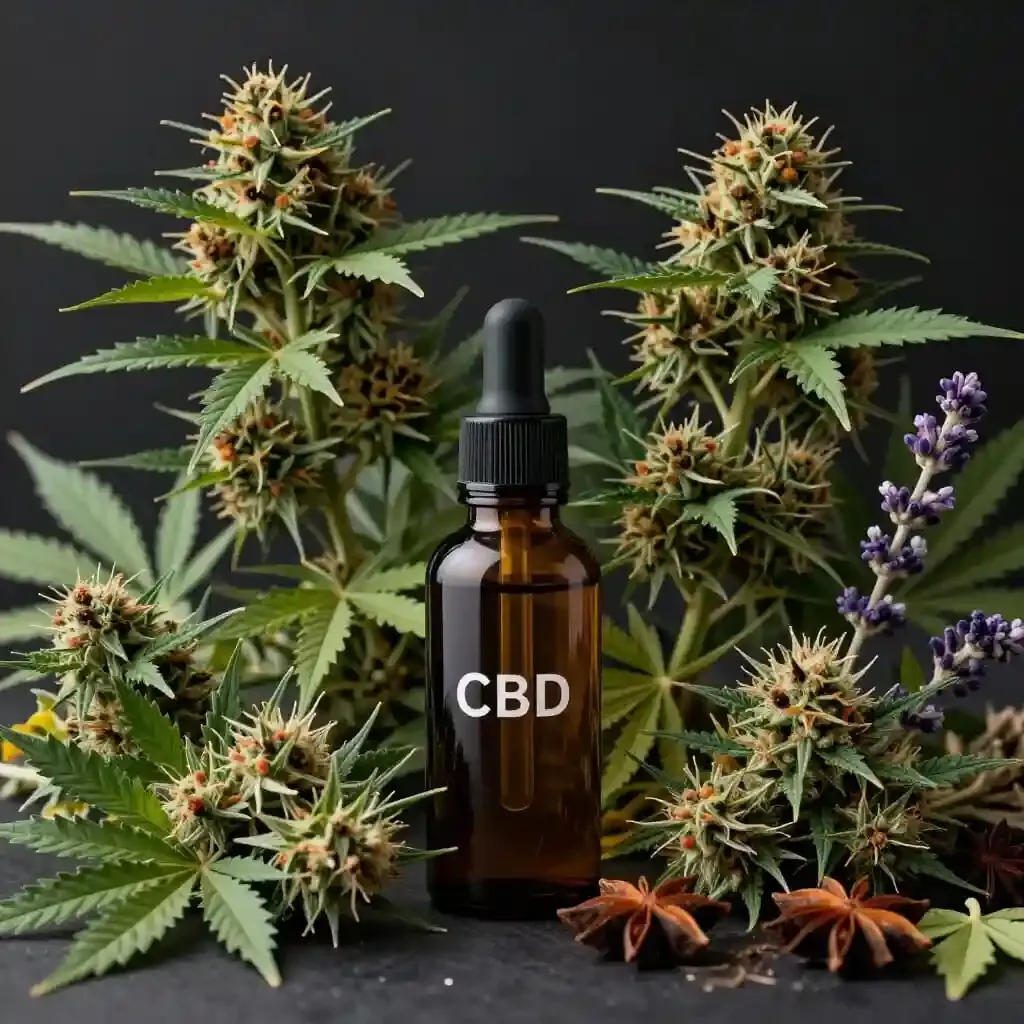
Full Spectrum CBD: Definition & Entourage Effect
Definition
A full-spectrum CBD extract retains the entire range of active compounds naturally found in hemp: CBD, but also other cannabinoids (CBG, CBN, CBC), terpenes, and flavonoids. It also contains trace amounts of THC, kept under the legal 0.3% threshold. It’s the extract profile closest to the original plant.
How the Term Is Used
The term “full spectrum” appears on labels to distinguish a raw extract from a purified one like isolate. It’s associated with the entourage effect hypothesis: the idea that hemp’s various compounds work in synergy rather than in isolation. In cooking, a full-spectrum oil brings a more herbal, pronounced taste than an isolate-based oil, which can influence the choice depending on the recipe and a guest’s tolerance for trace THC.
Key Takeaways
- Full spectrum retains all the cannabinoids, terpenes, and flavonoids found in hemp.
- It contains trace amounts of THC, capped at 0.3% under most regulations.
- It’s associated with the entourage effect hypothesis, not established as a therapeutic claim.
- Its taste is more pronounced and herbal than that of an isolate.
- It’s distinguished from broad spectrum by the presence of residual THC.
Related Terms
- Broad spectrum — an extract retaining several cannabinoids but with the THC removed.
- CBD isolate — a 99%-pure form containing only cannabidiol.
- Entourage effect — the hypothesis that hemp’s compounds work together rather than in isolation.
FAQ
Does a full-spectrum extract contain THC? Yes, but only in trace amounts, under the legal 0.3% threshold set for CBD products.
Is full spectrum more effective than isolate? That remains a hypothesis — the entourage effect — not scientifically settled as a general claim of superiority.
Can full-spectrum oil be used in any recipe? Yes, but its more pronounced taste may be less suited to delicate sweet preparations than a neutral isolate.