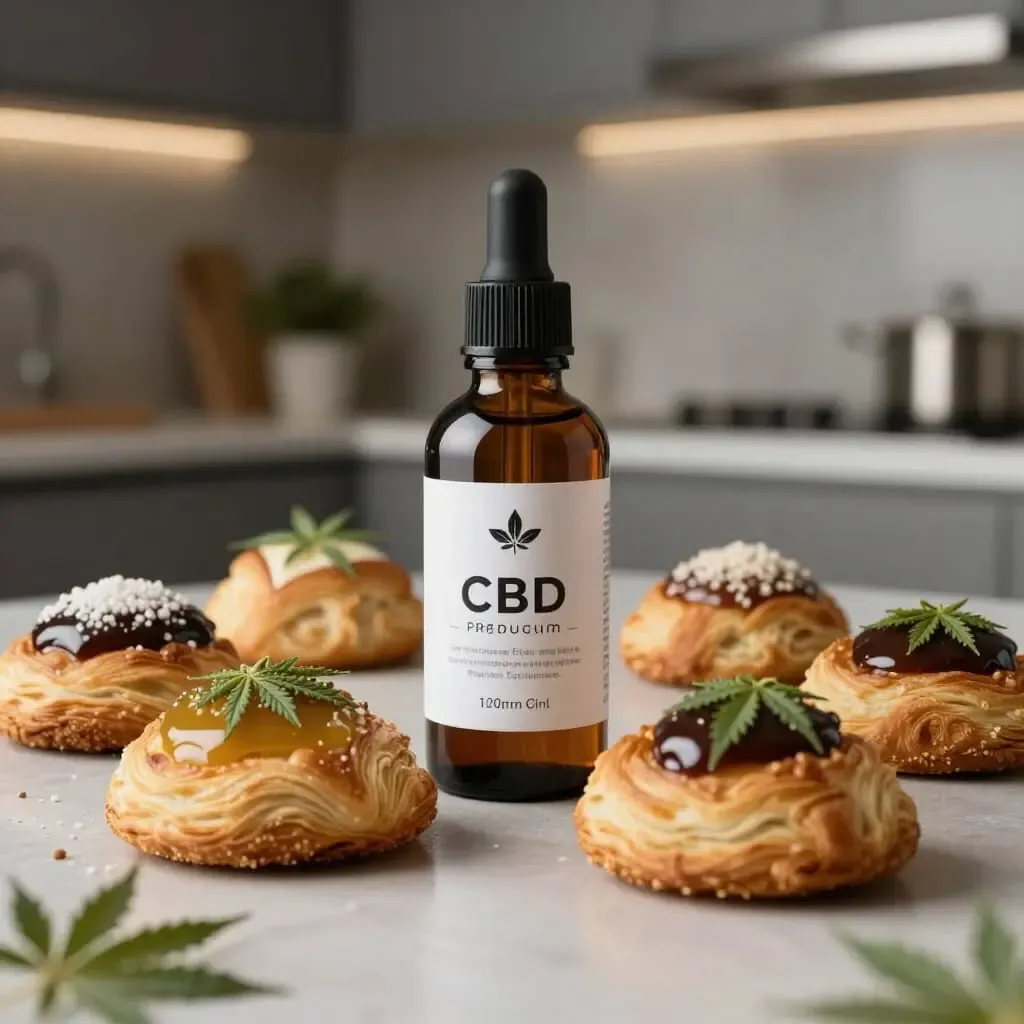
CBD: Definition & Uses in CBD Cooking
Definition
CBD, or cannabidiol, is a compound extracted from hemp (Cannabis sativa). Unlike THC, it isn’t classified as a narcotic or psychotropic substance: it doesn’t produce a high. It’s available as oil, flower, capsules, or infusions, and is increasingly used as an ingredient in culinary recipes.
How the Term Is Used
In cooking, CBD is mainly incorporated as an oil or extract, added cold or at the very end of cooking to preserve its properties, in preparations like infusions, dressings, baked goods, or drinks. The term “CBD” refers to the everyday, commercial name for the product — on a label, a menu, or a recipe, it’s this abbreviation that appears, rather than the full scientific name “cannabidiol.” Dosage remains a key consideration: CBD oils list a concentration (in mg) that needs to be adjusted according to the recipe and serving size.
Key Takeaways
- CBD is non-psychoactive: it doesn’t produce the high associated with cannabis.
- Legal CBD products must stay under a 0.3% THC threshold, the standard limit across most regulated markets.
- It’s available in several forms: oil, flower, capsules, infusions.
- In cooking, it’s best used cold or added at the very end of cooking to preserve its properties.
- CBD is often sought out for its reported calming effect, though this isn’t a medical treatment claim.
Related Terms
- Cannabidiol — the full scientific name that “CBD” abbreviates.
- THC — the psychoactive cannabinoid in cannabis, whose level is strictly regulated in CBD products.
- Cannabinoid — the family of compounds CBD belongs to, alongside THC and other compounds.
FAQ
Is CBD legal? In most regulated markets, yes — provided the product stays under the legal THC threshold, typically 0.3%.
Does CBD have a psychoactive effect? No, CBD isn’t classified as a psychotropic substance and doesn’t produce a high, unlike THC.
Can you cook with CBD? Yes, in the form of oil or extract, usually added cold or at the end of cooking to preserve its properties.