CBD Oil: Definition, Dosage & Cooking Uses
Definition
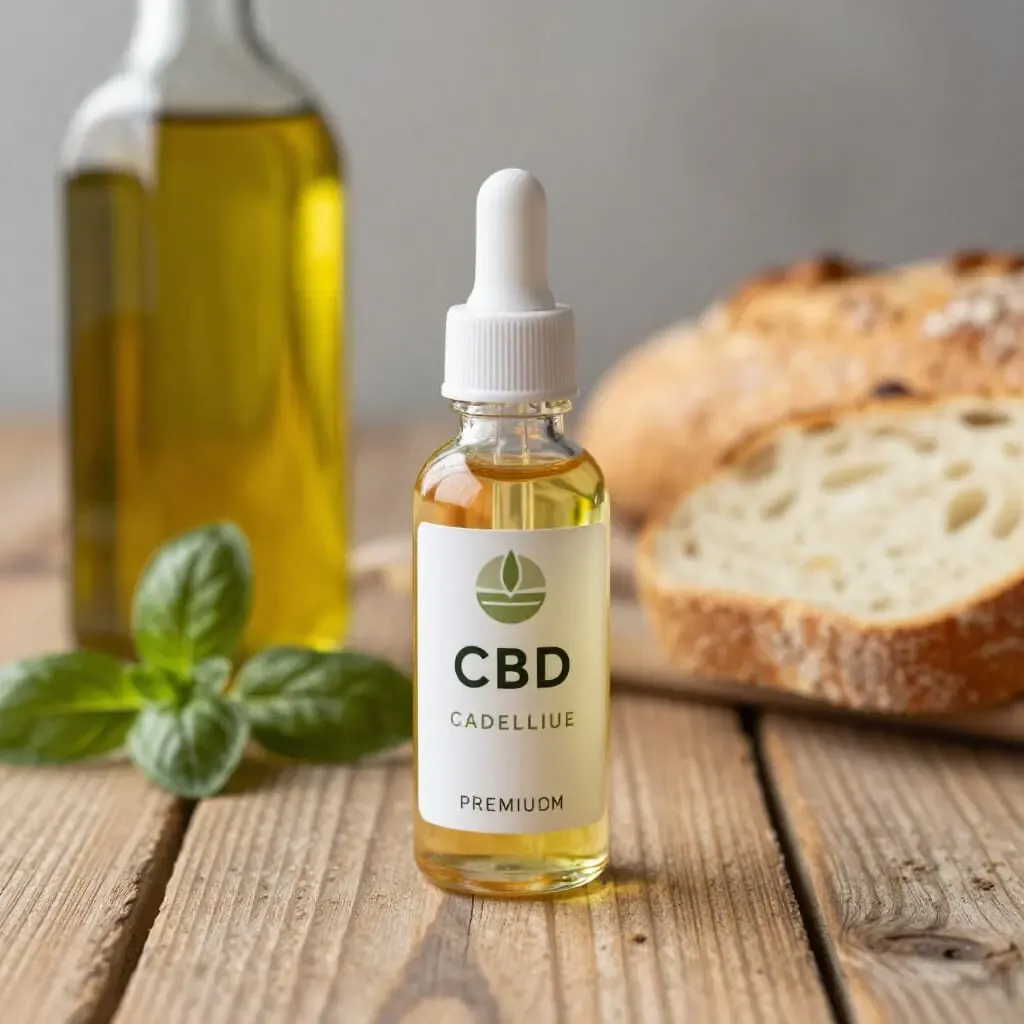
CBD oil is a liquid preparation that combines cannabidiol extracted from hemp with a carrier oil, most often MCT oil (derived from coconut), hemp oil, or olive oil. This dilution makes CBD easier to dose and absorb, since it isn’t water-soluble. Its concentration is stated as a percentage or in milligrams on the bottle, usually supplied with a dropper.
How the Term Is Used
CBD oil is traditionally taken sublingually: a few drops placed under the tongue, held there for 60 to 90 seconds before swallowing, for more direct absorption through the mucous membranes. In cooking, it’s also the most practical form to work into a recipe: its liquid, dropper-dosed format allows a precise amount of CBD to be added to a dressing, a baked good, or a drink, added cold or at the very end of cooking to limit heat degradation of the cannabinoid.
Key Takeaways
- CBD oil combines extracted cannabidiol with a carrier oil (MCT, hemp, or olive).
- Concentration is expressed as a percentage or in mg, to be adjusted according to the recipe and serving size.
- Sublingual use (under the tongue, 60–90 seconds) remains the reference method of consumption.
- In cooking, it’s added cold or at the very end of cooking to preserve the cannabinoid.
- It’s available in several profiles: full spectrum, broad spectrum, or isolate-based extract.
Related Terms
- MCT oil — fractionated coconut oil, used as a neutral-tasting carrier to dilute CBD.
- Sublingual route — a method of administration involving holding the product under the tongue before swallowing.
- CBD — the active cannabinoid diluted in the carrier oil.
FAQ
Can CBD oil replace a regular cooking oil? No: it’s dosed for drop-by-drop use and degrades at high temperatures, so it’s used as an addition, not as the main fat in a recipe.
What’s the difference between MCT oil and hemp oil as a carrier? MCT oil is neutral in taste and color, while hemp oil brings a more noticeable earthy note, valued in certain savory recipes.
Should CBD oil be heated when adding it to a recipe? No, it’s recommended to add it cold or right at the end of cooking to avoid heat degrading the cannabidiol.