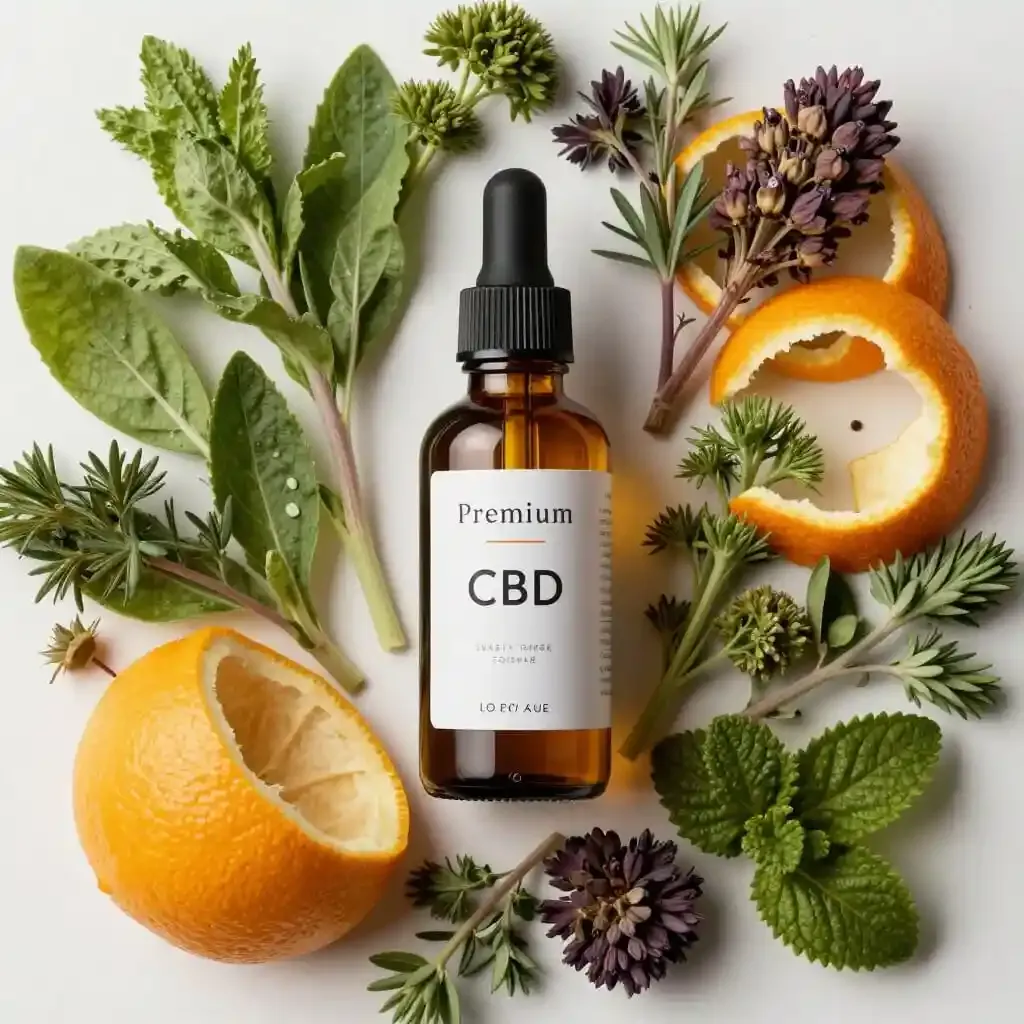
Broad Spectrum CBD: Definition & THC-Free Profile
Definition
A broad-spectrum CBD extract retains several cannabinoids and terpenes from hemp, much like full spectrum, but the THC is removed through an additional purification step. It positions itself as a middle ground between full spectrum, which keeps trace THC, and isolate, which is reduced to CBD alone.
How the Term Is Used
Broad spectrum appeals to consumers who want the diversity of hemp compounds — associated with the entourage effect hypothesis — without any trace of THC, for instance for professional reasons or zero tolerance for that cannabinoid. In cooking, it keeps a richer aromatic profile than an isolate while sidestepping the question of residual THC, making it a frequent choice for recipes aimed at a broad audience.
Key Takeaways
- Broad spectrum keeps several cannabinoids and terpenes, but removes the THC.
- It sits between full spectrum (residual THC) and isolate (CBD alone).
- Removing the THC requires an additional purification step after extraction.
- Its aromatic profile stays more pronounced than an isolate, while avoiding THC.
- It suits people who want the entourage effect without detectable THC.
Related Terms
- Full spectrum — an extract retaining every compound in hemp, including trace THC.
- CBD isolate — a 99%-pure form containing only cannabidiol, with no terpenes or other cannabinoids.
FAQ
Does broad spectrum really contain zero THC? It contains very low residual levels, generally undetectable at standard testing thresholds, but total absence isn’t guaranteed 100% of the time.
Why choose broad spectrum over full spectrum? To benefit from the diversity of hemp compounds without introducing THC, particularly for those sensitive to that cannabinoid or bound by professional constraints.
Does broad spectrum taste different from isolate? Yes, it retains terpenes that give it an earthy note, whereas isolate is neutral in taste.