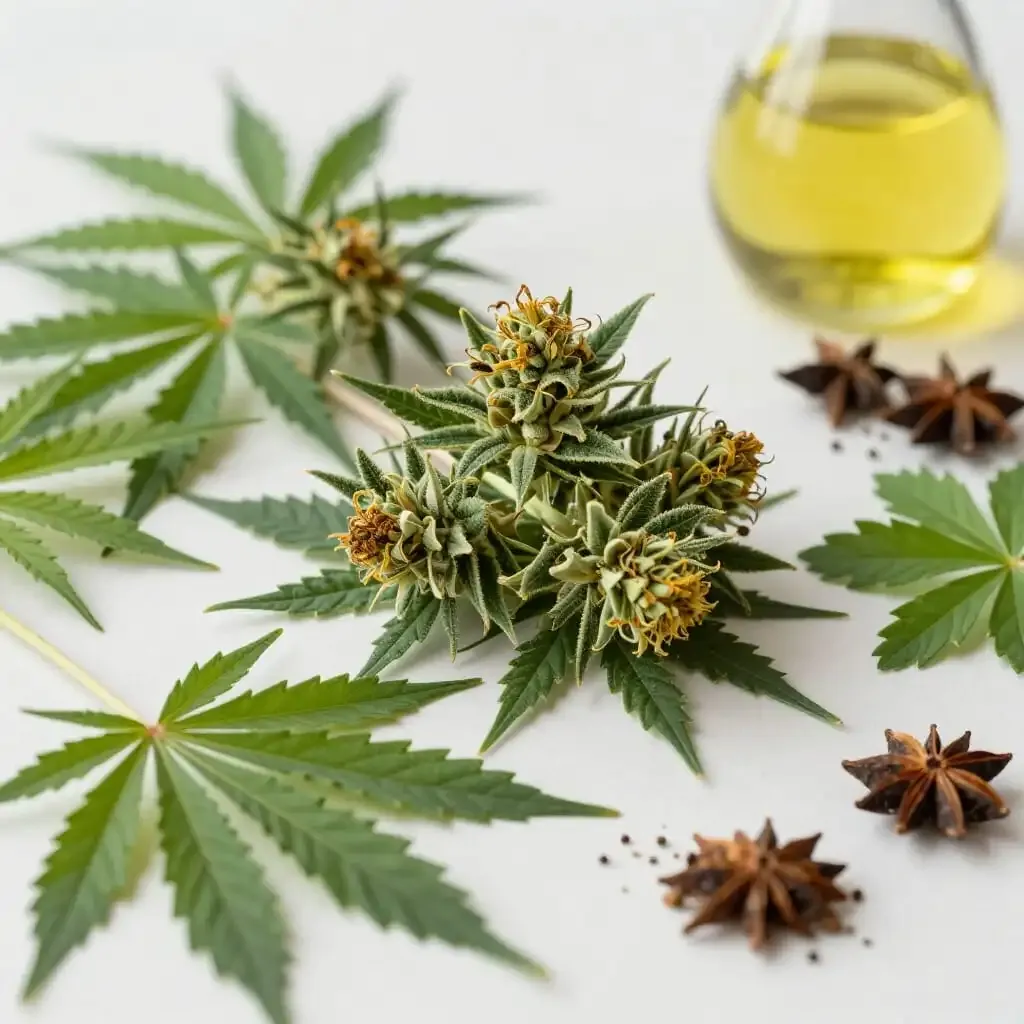
Cannabinoid: Definition & Role in CBD Recipes
Definition
A cannabinoid is a chemical compound capable of activating the cannabinoid receptors found in the human body. This family covers three broad categories: phytocannabinoids, produced by the cannabis plant (such as CBD or THC); endocannabinoids, produced naturally by the body (such as anandamide); and synthetic cannabinoids, created in a lab.
How the Term Is Used
In the CBD space, the term “cannabinoid” is mainly used to place a specific compound (CBD, THC, CBN…) within this broader chemical family. It helps explain why some products combine several cannabinoids together, or why a single hemp plant can contain dozens of different compounds — researchers estimate that around a hundred distinct cannabinoids have been identified in cannabis. It’s also the term that links CBD to the endocannabinoid system, the network of receptors these compounds act on.
Key Takeaways
- A cannabinoid activates the cannabinoid receptors in the human body.
- There are three families: phytocannabinoids, endocannabinoids, and synthetic cannabinoids.
- CBD and THC are both phytocannabinoids, derived from hemp.
- The body produces its own endocannabinoids, such as anandamide.
- Around a hundred distinct cannabinoids have been identified in cannabis.
Related Terms
- CBD — a non-psychoactive phytocannabinoid, one of the most studied cannabinoids.
- THC — a psychoactive phytocannabinoid, whose level is strictly regulated in CBD products.
- Endocannabinoid system — the network of receptors that cannabinoids act on, whether plant-derived or produced by the body.
FAQ
Are CBD and THC both cannabinoids? Yes, they’re two examples of phytocannabinoids, the category of cannabinoids produced by the cannabis plant.
Does the human body produce its own cannabinoids? Yes, these are called endocannabinoids; anandamide is a well-documented example.
How many cannabinoids exist? Researchers estimate that around a hundred distinct cannabinoids have been identified in cannabis.