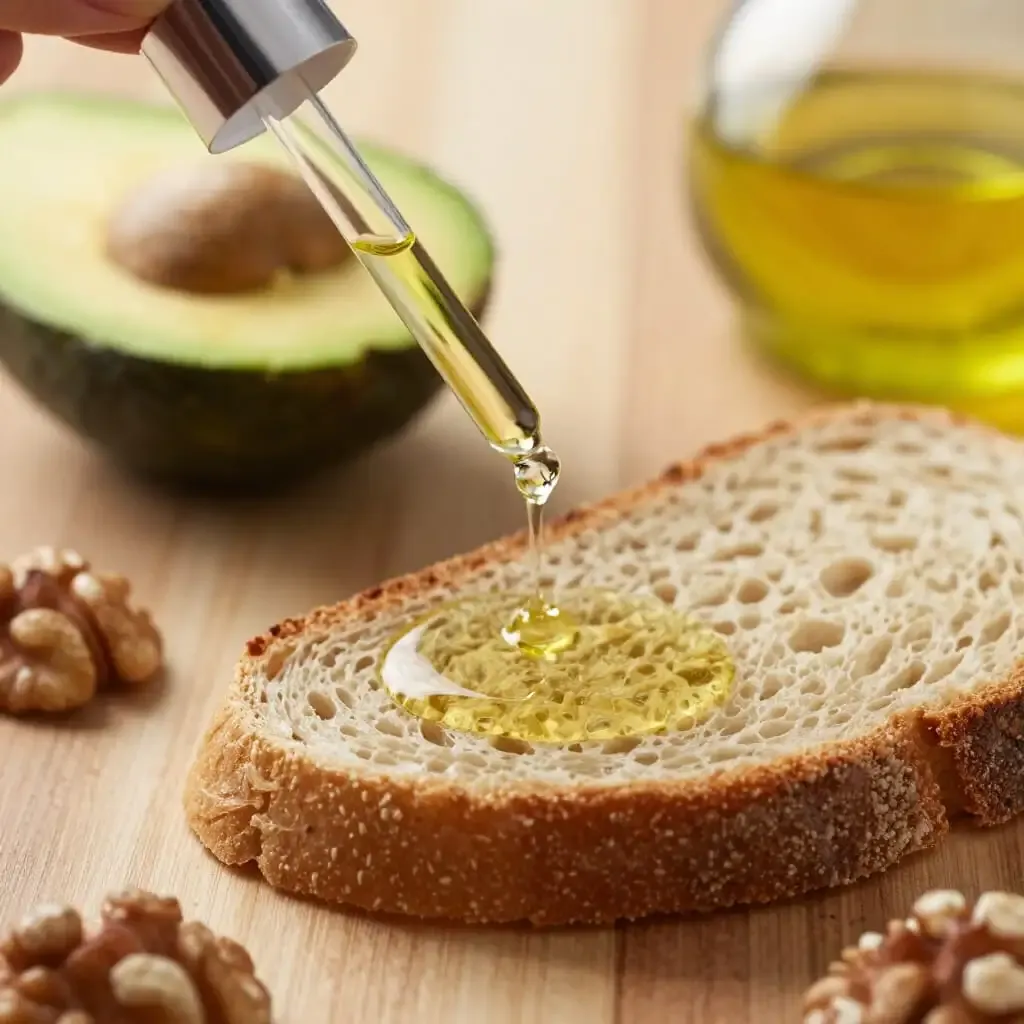
Bioavailability: CBD Absorption Explained
Definition
Bioavailability refers to the proportion of consumed CBD that actually reaches the bloodstream and becomes active in the body. It’s expressed as a percentage: if a 100 mg dose of CBD has a bioavailability of 15%, only about 15 mg actually makes it into the blood. This proportion varies significantly depending on the method of consumption.
Usage Context
This is a key concept for understanding why two products with the same stated dosage can produce very different effects. The oral route (capsules, tea, CBD-infused food) passes through the liver before reaching general circulation — a phenomenon known as the first-pass effect — which breaks down part of the CBD before it becomes active; its bioavailability typically falls between 6% and 19%. The sublingual route, which partly bypasses this trip through the liver, reaches higher rates, often estimated between 13% and 20%. Inhalation offers the highest bioavailability of all methods, but with a shorter duration of effect.
Key Takeaways
- Bioavailability measures the share of CBD that actually reaches the blood, not the amount consumed to begin with.
- The oral route is subject to the first-pass liver effect, which reduces its bioavailability (roughly 6% to 19%).
- The sublingual route partly bypasses this effect and typically reaches 13% to 20% bioavailability.
- Inhalation has the highest bioavailability of any method, but with less lasting effects.
- Higher bioavailability doesn’t automatically mean a better product — duration of effect and intended use matter too.
Related Terms
- Sublingual Method — taking CBD by holding it under the tongue, which improves absorption compared with standard ingestion.
- MCT Oil — a plant-based carrier oil used with CBD, chosen in part for how well it supports absorption.
FAQ
Why is CBD’s oral bioavailability so low? Because a large part of the CBD is broken down by the liver before it reaches the bloodstream, a phenomenon known as the first-pass effect.
Is the sublingual route always more effective than the oral route? It generally shows higher bioavailability, but the effect actually felt also depends on dose, consistency of use, and individual sensitivity.
Can CBD bioavailability be improved? Yes, certain carriers like MCT oil, or holding a sublingual dose under the tongue longer, can support better absorption than swallowing it directly.