CBD Pollen: Complete Guide, Effects, Use & Buying
In short
- CBD pollen is a powder derived from hemp trichomes, concentrated at 10–50% CBD depending on the variety.
- It can be consumed as an infusion (0.2–0.4 g with a fat source), via vaporization (160–180 °C), or in cooking after decarboxylation.
- Its crumbly texture and terpene profile (myrcene, limonene, linalool) set it apart from more compact pressed resin.
- Legal in France if THC < 0.3%; it can be stored for 6–12 months at 15–20 °C in an opaque glass jar.
CBD pollen is a fine powder derived from the trichomes of hemp flowers, which are rich in cannabinoids such as CBD. Unlike other extracts, it maintains a crumbly texture and a natural terpene profile (myrcene, limonene), offering immediate relaxation without significant drowsiness. Its CBD Concentration generally varies between 10% and 20%, but can reach up to 50% for premium varieties, such as certain high-end pressed pollens or extracts.
In France, it is legal as long as its THC content remains below 0.3%, and it can be stored for 6 to 12 months in an opaque glass jar away from light. It can be used for vaporization (160–180 °C), as an infusion with a fat source (0.2–0.4 g), or in baking after decarboxylation. It is distinguished by its purity and richness in active compounds, making it ideal for targeted relaxation or mood enhancement without psychoactive effects.
What exactly is CBD pollen? It is a powder obtained by sifting hemp flowers to collect the trichomes loaded with CBD and terpenes. This method preserves the integrity of the cannabinoids and aromas, unlike processes such as pressing, which can sometimes alter the molecular structure.
Traditional CBD pollen comes in a granular form (blond to greenish), while the pressed version forms more concentrated blocks, often used for precise dosing in cooking or inhalation. Its main advantage lies in its ease of use and lower cost compared to other concentrates, while providing an effective alternative for managing stress and mild pain.
What is CBD Pollen?
CBD pollen comes from the glandular trichomes of hemp flowers—microscopic structures rich in CBD and terpenes. This fine powder is characterized by its variable concentration of cannabidiol, generally ranging between 10% and 20%, though some premium varieties can reach 50% or more. For example, brands like Skuff CBD may show a 14% rate, while other formulations exceed 30% or even 45%, depending on the extraction methods and selected strains.
This diversity allows users to tailor their choice to specific needs, whether they seek light relaxation or a stronger effect on anxiety or pain. The uniqueness of pollen also lies in its preserved composition: terpenes like myrcene or limonene are naturally present, contributing to its aromatic profile and synergistic effects (the Entourage Effect).
Why buy CBD pollen instead of another concentrate? Its legality in France and Europe makes it an accessible product, provided its THC content remains below 0.3%, as required by regulations. Unlike resin or CBD oil, pollen is distinguished by its crumbly texture and ease of use: it can be consumed through vaporization, in an infusion (using a fat source to optimize absorption), or integrated into pastries after decarboxylation.
Its cost remains moderate compared to purer extracts, while offering high purity thanks to a minimal sifting process. Finally, its lack of sedative effects (due to a controlled CBD/THC ratio) makes it a preferred choice for daytime relaxation or mood improvement without the risk of drowsiness.
- Traditional pollen: powdery texture, CBD levels vary by variety.
- Pressed pollen: compacted into slabs, more concentrated, crumbly interior.
How to turn pollen into resin?
How can you turn CBD pollen into resin? The most common method relies on cold pressing, a technique that compacts the powder without significantly altering its Cannabinoid composition. After collecting the pollen (by sifting hemp flowers), you simply heat it slightly (not exceeding 80 °C) to soften the natural resins, then press it between two plates or in a mold to obtain crumbly blocks.
These blocks, while appearing more concentrated, maintain a powdery internal structure, unlike more homogeneous traditional resin. An alternative is to use a pollen extract mixed with a solvent (such as ethanol or isopropanol) to isolate more CBD, then evaporate the solvent to leave behind a purer resin. This transformation can increase the CBD concentration (up to 50% or more), but requires specific equipment and precautions to preserve terpenes and avoid the degradation of active compounds.
Origin and Manufacturing Method of CBD Pollen
The origin and manufacturing method of CBD pollen follow a rigorous artisanal process, prioritizing Cannabis sativa L. varieties grown on certified organic farms without the use of pesticides or chemical solvents. Harvesting occurs at the optimal maturity stage of the flowers, where the concentration of cannabinoids, particularly CBD, is at its peak.
After this stage, the flowers undergo low-temperature drying to preserve their integrity before being sifted to isolate the CBD-rich trichomes. This manual process, often performed by artisans, guarantees exceptional purity and a richness of active compounds, while maintaining the aromas and phytochemical properties of the hemp.
How is CBD pollen manufactured using the two main techniques? Dry sifting relies on fine meshes, generally between 70 and 150 microns; a 73-micron sieve offers a finer powder that is purer than a 150-micron sieve. This rapid method takes about 30 minutes to separate the trichomes from plant residue.
In contrast, Ice-O-Lator extraction requires pre-freezing the flowers for 48 hours, followed by a drying and filtration process that can last 1 to 2 days. Although longer, this technique yields CBD pollen with better-preserved terpenes, making it ideal for immediate relaxation without drowsiness.
After collection, the kief—or raw CBD pollen—is manually kneaded for a maximum of 5 to 10 minutes to homogenize the powder without altering its quality. This crucial step prevents any degradation of cannabinoids or terpenes, such as myrcene, which is responsible for calming effects.
Some artisans then proceed with gentle heat pressing, between 40 and 50 °C, to form compact blocks, never exceeding 80 °C to maintain product integrity. These more concentrated blocks are highly prized for their richness in CBD and ease of use, whether for vaporization or cooking.
- Low-temperature drying of flowers.
- Passing through an ultra-fine sieve (70–150 µm).
- Collection of kief (raw pollen).
- Manual kneading for 5–10 minutes maximum.
- Optional pressing at 40–50 °C.
CBD Pollen vs. CBD Hash: What are the differences?
CBD pollen is distinguished from CBD hash by its texture and method of production. Obtained by sifting hemp trichomes, it presents as a light, crumbly fine powder, preserving a richness of natural terpenes like myrcene, which is responsible for immediate relaxation without drowsiness.
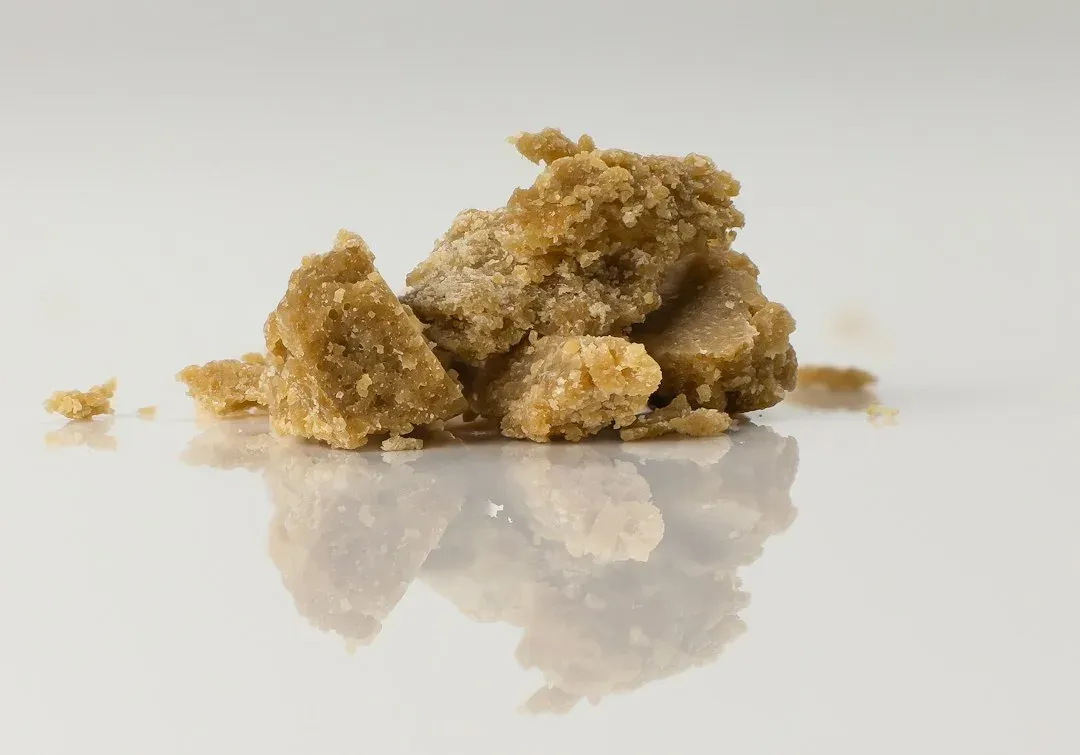
Conversely, hash, or resin, results from the pressing of pollen, giving it a sticky and compact appearance. This difference is also explained by their CBD content: hash generally concentrates more cannabinoids, with percentages often higher than those found in pollen.
| Feature | CBD Pollen | CBD Hash |
|---|---|---|
| Texture | Powdery, light, crumbly | Sticky, compact |
| Aromas | Rich in natural terpenes | More intense and robust |
| Production | Sifting trichomes | Pressing pollen |
| CBD Content | Variable, often 10–50% | Generally more concentrated |
| Consumption | Infusion, vaporization, baking | Vaporization, smoking |
To the touch, the difference between CBD pollen and resin is immediate: the former crumbles between your fingers, revealing its light powder, while the resin adheres and forms a homogeneous block. This tactile distinction also reflects their purity and method of preparation. Regarding price, a gram of pollen or resin varies from €5 to €18, depending on the concentration.
A resin at 30% provides approximately 300 mg of CBD per gram, compared to 100 to 150 mg for a flower at 12%, illustrating the gap in dosage between the two extracts. Whether you choose resin or CBD pollen, the difference is felt immediately at your fingertips.
To transform pollen into resin at home, simply apply gentle heat between 40 and 50 °C, without exceeding 80 °C, to avoid degrading the terpenes and the CBD content. Vaporizing the two forms requires different temperatures: 200 to 220 °C for pollen or resin, compared to 170 to 190 °C for flower. This step is crucial to preserve the desired aromas and effects, whether for relaxation or mood enhancement.
Resin or CBD pollen: what difference is felt at your fingertips?
Resin or CBD pollen: what is the difference at your fingertips? The answer lies in their opposite textures. Pollen, derived from simple sifting of trichomes, forms a fine powder that scatters at the slightest contact, releasing floral and earthy scents typical of hemp. In contrast, resin, obtained through pressing, is handled like a sticky, almost waxy paste, revealing its increased concentration of cannabinoids.
This tactile opposition also reflects their stability: pollen, being more volatile, oxidizes quickly if not kept in an airtight container, while resin is more stable and resists time better. These characteristics directly influence their use, whether for CBD baking or targeted vaporization.
CBD pollen and CBD resin: what is the difference?
CBD pollen and CBD resin: what is the difference? The first lies in their manufacturing process, where pollen is born from the mechanical sifting of trichomes, preserving a richness of terpenes like myrcene, known for its soothing effects on stress and pain. Resin, on the other hand, is the result of hot pressing, which intensifies its CBD content but can alter some aromatic compounds.
This distinction also translates to their absorption profiles: pollen, being lighter, mixes easily into baking recipes or infuses into oils, while resin, being more concentrated, is often reserved for vaporization for a rapid effect. Finally, their impact on sleep differs: thanks to its terpenes, pollen promotes relaxation without drowsiness, whereas resin, being more powerful, can induce sedation depending on the dosage.
How to consume CBD pollen?
CBD pollen, this fine powder of trichomes rich in cannabinoids, is primarily consumed in three ways: as an infusion, via vaporization, or integrated into CBD flowers. For an infusion, mix 0.2 to 0.4 g of pollen into a fat source such as whole milk or coconut oil heated to a simmer, which promotes the assimilation of active ingredients.
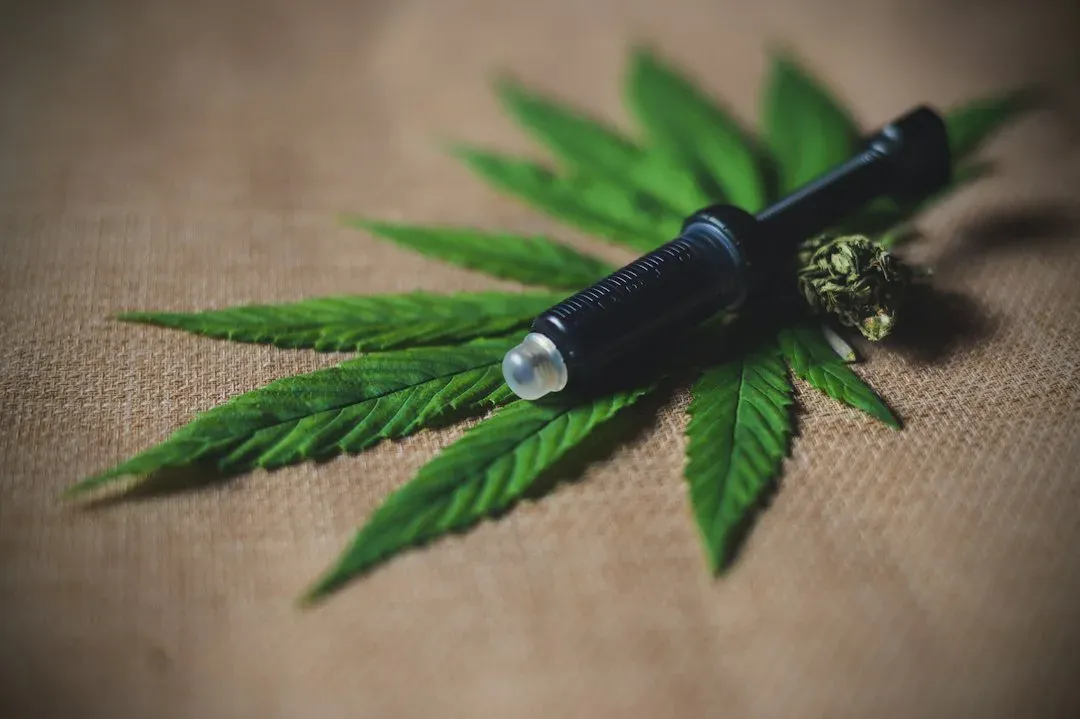
Vaporization, meanwhile, releases active principles at 160–180 °C without combustion, providing immediate relaxation and a rapid onset. Finally, sprinkled over CBD flowers, it enhances both the effects and aromas while preserving the product’s purity. These methods adapt to your needs: discreet relaxation or targeted stress and pain relief. How to consume CBD pollen daily?
For your first experience with vaporization, start with a tiny dose, less than 0.1 g, to evaluate your sensitivity to this concentrated CBD pollen. The recommended maximum daily dose should not exceed 50 mg of CBD; this is a limit to respect to avoid accumulation.
In the kitchen, a prior decarboxylation in the oven (110 °C / 230 °F for 25–30 minutes) is essential to transform CBDA (cannabidiolic acid) into active CBD, thus optimizing its efficacy. This step is crucial for recipes where the pollen is integrated into baking or savory dishes, where its richness in terpenes adds a unique touch. CBD pollen for smoking or vaporizing requires careful dosing.
Direct ingestion of pollen—for example, sprinkled on yogurt or in a salad—offers a progressive action over 30 to 60 minutes, ideal for prolonged relaxation without drowsiness. Conversely, vaporization provides immediate relaxation within minutes thanks to the pulmonary absorption of cannabinoids.
Finally, incorporating it into balms or creams allows for targeted topical action on areas of stress and pain, such as muscles or skin. Each method exploits the properties of hemp and its trichomes while adapting to your preferences: culinary discretion, respiratory speed, or local relief. How to use kief, skuff, and pollen according to your needs?
- Infusion: 0.2–0.4 g + fat source, 5–10 min at a simmer.
- Vaporization: 160–180 °C, <0.1 g to start.
- Cooking: decarboxylation at 110 °C / 25–30 min before use.
- Topical: mixed with a fatty base for a local balm.
What are the benefits of CBD pollen?
CBD pollen is distinguished by its non-drowsy action, offering immediate relaxation while preserving mental clarity, making it a preferred ally for managing daily stress and anxiety. Its anti-inflammatory properties effectively target chronic pain and muscle tension, while its richness in cannabinoids—including CBD—works synergistically with terpenes like myrcene to reinforce these effects.
Users also report a notable improvement in sleep quality, with easier onset and more restorative nights without altering natural cycles. These benefits, documented by user feedback, are based on the interaction of CBD with the endocannabinoid system, particularly through the modulation of CB2 receptors, as confirmed by recent studies on its role in regulating inflammation and stress response. What are the user-documented benefits of CBD pollen?
The absorption of CBD pollen in the form of a fine powder or during vaporization allows for perceptible relaxation within 5 to 15 minutes, with an action duration of 2 to 4 hours, depending on dosage and individual sensitivity. Its mechanism is based on a partial activation of CB2 receptors, as demonstrated by a study published in Europe PMC in 2022, while avoiding binding to CB1 receptors, which are responsible for psychoactive effects.
This specificity explains why pollen does not cause marked drowsiness, unlike other hemp extracts rich in THC. The trichomes collected during the pressing of hemp flowers concentrate these active compounds, offering optimal purity and efficacy for direct consumption or integration into baking, infusions, or even topical application in balms. How does CBD act in the body to produce these effects?
- Daily stress and anxiety management.
- Support for chronic pain (arthritis, tension, neuropathy).
- Improved sleep quality.
- Potential neuroprotective action via the endocannabinoid system.
How to choose your CBD pollen?
To distinguish high-quality CBD pollen from the market offerings, several criteria must be verified. First, its color should vary from blond to light brown, a sign of an extraction process that respects the cannabinoid-rich trichomes. A crumbly but not dusty texture, along with a distinct scent featuring notes of pine, earth, or citrus (linked to terpenes like myrcene or limonene), confirms its purity and richness in active compounds.
The CBD content must be clearly indicated, ideally accompanied by accessible laboratory analyses, while traceability (hemp variety, organic cultivation, absence of pesticides) guarantees a transparent origin. These elements, combined with a presentation as a fine powder rather than a compacted one, help avoid cheap products or those altered by aggressive pressing processes.
Once acquired, CBD pollen is best stored in an airtight opaque glass jar, away from light and at a stable temperature of 15 to 20 °C. These conditions preserve its properties for up to 6 to 12 months without significant loss of efficacy.
To ensure quality, prioritize specialized shops that publish certificates of analysis and strictly respect the legal limit of 0.3% THC. These guarantees limit the risks of contamination or under-dosed products, while ensuring an experience that meets expectations, whether for relaxation, stress management, or pain relief.
FAQ
Can you smoke CBD pollen? Technically yes, but combustion degrades cannabinoids and produces harmful substances; vaporization (160–180 °C) is preferred to preserve active compounds and respiratory health.
What is the difference between kief, skuff, and pollen? Kief refers to raw trichomes that have fallen to the bottom of the grinder; skuff is a coarse sifting (often 150 µm); pollen is a fine sifting (73 µm) that is purer and more concentrated.
Is CBD pollen legal in France? Yes, as long as the finished product contains less than 0.3% THC, in accordance with European regulations on industrial hemp.
How long do the effects of CBD pollen last? Depending on the method of consumption, effects appear in 5–15 min (vaporization) or 30–60 min (ingestion) and persist for 2–4 hours.
Can you cook with CBD pollen? Yes, after decarboxylation in the oven at 110 °C for 25–30 min, it can be integrated into any recipe containing a fat source (butter, oil, cream).
How should I dose CBD pollen when starting out? Start with 0.1 g via vaporization or 0.2 g via infusion, without exceeding 50 mg of CBD per day across all products combined.
Sources
- CBDucbd — Side effects and definition of CBD pollen – cbdbicyclette.fr
- Cducbd — What is CBD pollen and where to find it
- High Society — Manufacturing process of CBD resin
- CBDoo — Kief, skuff, and CBD pollen: explanations and rates
- CBD’eau — CBD pollen: what is it and how to choose
- Gardenz — CBD flower or resin: a comparative guide
- Mon Petit Herbier — Differences between CBD oil and resin
- Bienfaits du CBD — CBD pollen: everything to know about this wellness powder