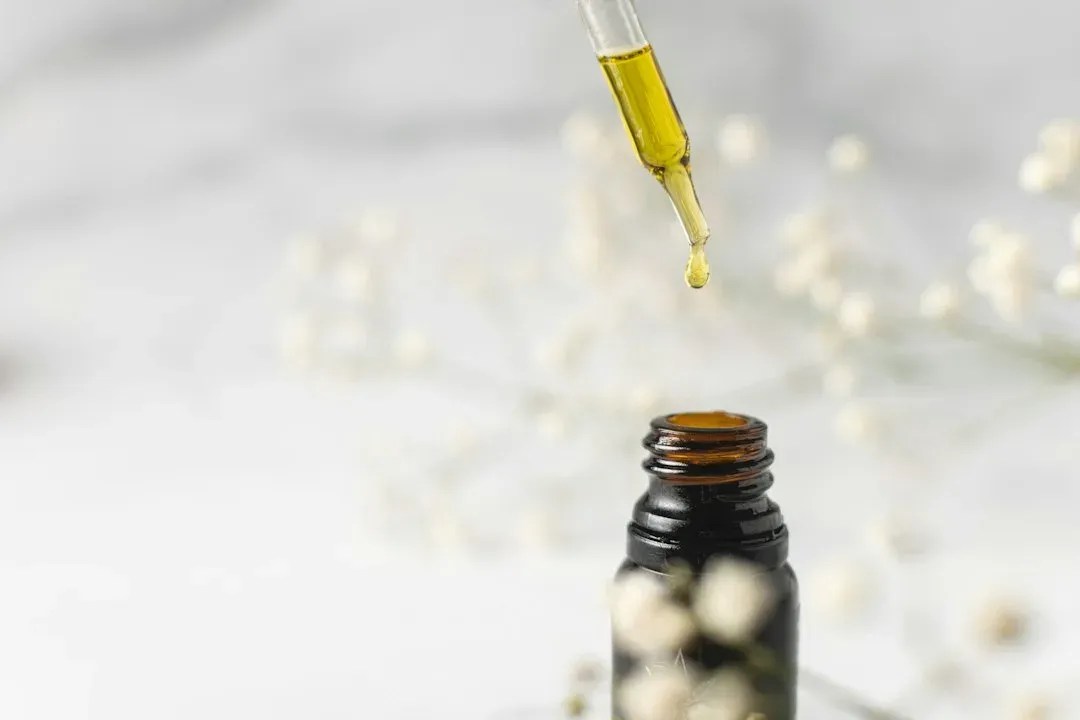
CBD Oil: Benefits, Dosage & How to Use
In short
- CBD oil is a hemp extract renowned for its relaxing and anti-inflammatory properties.
- It primarily helps manage stress and anxiety and improves sleep quality.
- Sublingual administration is the fastest method to feel the effects.
- Dosage should be gradual, starting with 5 to 10 mg and adjusted based on individual response.
CBD oil is highly praised today for its soothing and anti-inflammatory virtues, as well as its positive impact on sleep quality. Administered primarily as drops under the tongue, it helps regulate stress and relieve various chronic pains without producing psychoactive effects. The effectiveness of this product lies in the interaction between Cannabidiol and the body’s endocannabinoid system, offering a natural alternative to stabilize internal balance and improve daily physical and mental well-being.
What is CBD Oil and How Does It Work?
Cannabidiol, better known as CBD, is a natural organic terpene compound belonging to the vast family of cannabinoids. Found in the hemp plant, this compound was identified as early as 1940 and has become one of the most studied constituents of Cannabis sativa and Cannabis indica, second only to THC. Unlike THC, CBD does not cause an intoxicating effect, making it a preferred product for daily wellness.

Confusion often persists between CBD oil and hemp seed oil. However, the distinction is fundamental: hemp seed oil is obtained by cold-pressing seeds and offers nutritional benefits (omega 3 and 6), whereas CBD oil is an active extract concentrated with cannabidiol molecules.
The latter is designed to interact with the endocannabinoid system (ECS), a complex network of receptors distributed throughout the body. By binding to these receptors, CBD helps maintain internal balance, or homeostasis, by modulating the body’s response to external stressors or aggression.
The effectiveness of the oil also depends on its extraction method, such as supercritical CO2 Extraction, which ensures high purity and optimal preservation of terpenes and flavonoids, thereby enhancing the overall action of the product.
| Criteria | Hemp Seed Oil | CBD Oil |
|---|---|---|
| Extraction Method | Cold-pressing seeds | Extraction (CO2, solvents, carrier oil) |
| Main Components | Fatty acids (omega 3, 6), vitamins | CBD, terpenes, flavonoids |
| Primary Use | Cooking, cosmetics, nutrition | Wellness, pain relief, anxiety |
What are the Benefits of CBD Oil?
One of the major strengths of Cannabidiol lies in its anti-inflammatory and analgesic properties. For those suffering from chronic pain, CBD oil acts as a modulator that helps relieve pain and reduce muscle spasms. This action on inflammation is particularly sought after for joint disorders or inflammatory bowel diseases, such as Crohn’s disease.
Regarding mental health, research suggests that CBD can have a positive impact on depressive symptoms and emotional instability. By promoting a more stable mood, it becomes an ally for those seeking a natural alternative to support their psychological balance. Cannabidiol does not treat depression like a conventional medication, but it helps the body better manage emotional reactions.
Finally, the role of CBD in managing neurological disorders is one of the most documented areas. It is notably used to reduce the frequency of epileptic seizures, with significant results in at least 50% of patients treated for these pathologies. This ability to stabilize the brain’s electrical activity confirms the therapeutic potential of the product for complex neurological conditions.
- Reduction of inflammation and muscle spasms
- Decreased perception of pain
- Improvement in mental health and sleep
- Reduction of anxiety and depression symptoms
- Mitigation of epileptic seizures and neurological disorders
- Support for skin health
- Relief for inflammatory bowel disorders (Crohn’s disease)
- Action on certain psychiatric disorders
CBD Oil Benefits for Relaxation and Stress Management
The use of CBD oil is widely favored for fighting anxiety. Its mechanism of action is based on the ability of cannabidiol to interact with serotonin receptors, thereby influencing the stress response. Data from a meta-analysis of 316 people suffering from anxiety disorders confirm the molecule’s effectiveness in alleviating anxiety and promoting a positive mood.

The recommended dosage varies considerably depending on the intensity of the condition: mild stress can be managed with 10 to 25 mg per day, while more pronounced anxiety disorders may require doses up to 800 mg.
The impact on sleep is equally notable. CBD works by reducing the level of cortisol, the stress hormone, and by calming nocturnal brain activity. For a population where 10% suffer from chronic insomnia and 30% face it occasionally, CBD oil offers an alternative to improve the duration and quality of rest.
The concrete effect is a reduction in the number of nighttime awakenings and sleep that is perceived as deeper and more restorative. Consequently, morning fatigue decreases, improving alertness and productivity during the day. A clinical trial involving 20 adults specifically highlighted the improvement in sleep quality through oral administration of CBD.
- Significant improvement in overall sleep quality
- Reduction in the number of nighttime awakenings
- Feeling of deeper, more restorative sleep
- Decrease in morning fatigue
Dosage and Frequency of Use
The market now offers various concentrations to suit every profile. CBD oil concentrations typically range from 5% to 40%. The higher the percentage, the greater the number of milligrams of cannabidiol per drop, which reduces the volume of oil ingested to reach the target dose.
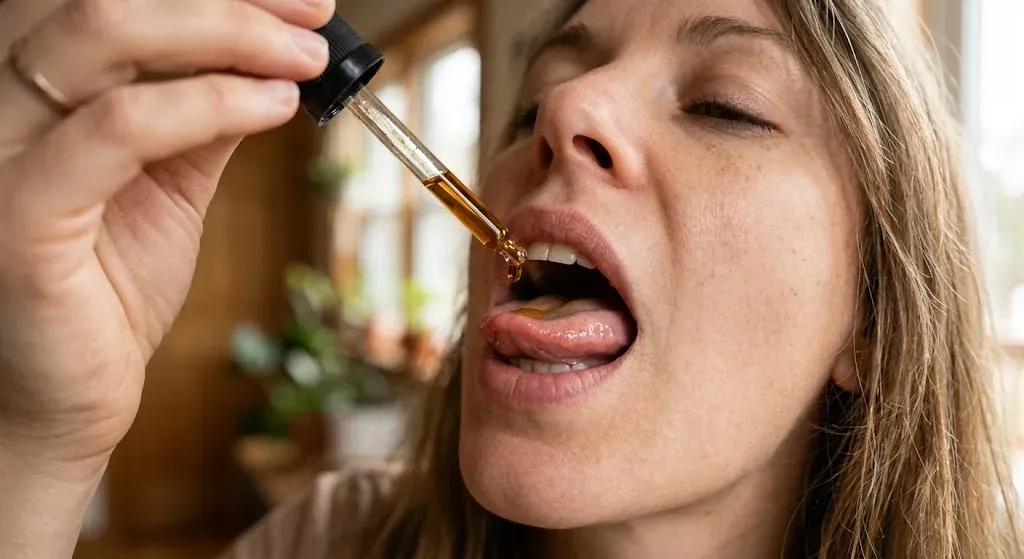
The choice of administration method directly influences the speed of action. The sublingual route is the most popular for an immediate effect, as it allows molecules to pass directly into the bloodstream via the mucous membranes, avoiding first-pass hepatic metabolism. Conversely, oral ingestion (mixed with food) offers a slower and more prolonged action.
| Method | Description | Key Benefit | Onset Time |
|---|---|---|---|
| Sublingual | Drops under the tongue (1-2 min) | Fast action and precise dosing | 15 to 30 minutes |
| Oral | Integrated into food | Masked taste | 45 min to 2 hours |
| Topical | Direct application to the skin | Localized action (muscles/joints) | Variable |
How to take 10% CBD oil? Usage tips
For beginners, 10% CBD oil is often recommended as an ideal starting point. The standard protocol consists of taking three drops in the morning and three drops in the evening. This approach allows you to evaluate the body’s tolerance without the risk of overdosing.
To maximize absorption, the sublingual technique is essential: place the drops under the tongue, hold for 1 to 2 minutes without swallowing, and then ingest the remainder. This practice allows you to feel the first beneficial effects in about 10 minutes.
Usage Tips to Maximize Benefits
Optimizing results with CBD oil relies on the “titration” rule. It is not recommended to massively increase doses on the first day. The recommended strategy is to start with a small dose, between 5 and 10 mg, and then gradually increase in increments of 5 to 10 mg until the desired effect is achieved.
Patience is an essential criterion for success. The body needs time to adapt to cannabidiol. You should observe the effects over a period of 2 to 3 days before deciding to adjust the dosage. This observation helps distinguish the actual effects of the product from daily variations in mood or pain.
The timing of consumption also plays a crucial role, especially for sleep. To facilitate falling asleep and ensure restorative rest, it is advised to take the oil approximately 3 hours before bedtime. This anticipation allows CBD to stabilize the nervous system before the transition phase into sleep.
- Start with a cautious dose of 5 to 10 mg
- Observe the effects over a period of 2 to 3 days
- Increase the dosage in increments of 5 to 10 mg
- Repeat the process until the desired effect is obtained
Safety, Side Effects, and Legislation
In France, the legal framework is strict: CBD consumption is perfectly legal provided that the THC level does not exceed 0.2%. This limit guarantees the absence of a psychoactive effect, thus differentiating industrial hemp from recreational cannabis. Production chain traceability and the registration of varieties in the European catalog are safety guarantees for the consumer.

Despite its relative safety, CBD oil can cause some side effects. Drowsiness is the most common effect, affecting more than 10% of users. Other rarer symptoms such as dry mouth, dizziness, or digestive issues (nausea, diarrhea) may appear. It is important to note that these reactions are often linked to a THC level higher than 0.3% or individual sensitivity.
Certain major medical contraindications exist. The use of CBD is discouraged for pregnant or breastfeeding women, as well as people suffering from liver failure. Particular vigilance is required for patients on anticoagulant or immunosuppressant treatment, as cannabidiol can modify the absorption of certain medications, leading to a risk of overdose or therapeutic inefficiency.
- Pregnant or breastfeeding women
- People with liver failure
- Patients on anticoagulants or immunosuppressants
- People suffering from Parkinson’s disease
FAQ
What are the downsides of CBD oil? Side effects may include drowsiness, dry mouth, or mild digestive issues (nausea, diarrhea).
What are the effects of CBD drops? When taken as drops (sublingually), the beneficial effects can appear quickly, approximately 10 minutes after administration.
Is it possible to take CBD every day? Yes, daily use is common, but it is recommended to start with low doses and consult a doctor if you are taking other medications.
How do you use CBD oil? The preferred method is the sublingual route: place a few drops under the tongue, wait 1 to 2 minutes, and then swallow.
What is the most powerful oil concentration? Concentrations generally range from 5% to 40%, depending on the brand and the user’s needs.
Sources
- Wikipedia - Cannabidiol – fr.wikipedia.org
- Ameli - CBD usage precautions
- ARS Occitanie - Risks associated with CBD
- PubMed - Pharmacology and therapeutic targets of CBD
See Also
- Endocannabinoid System
- CO2 Extraction
- Chorizo, Goat Cheese and CBD Quesadillas
- CBD Ice Cream: Usage, Dosage and Specifics