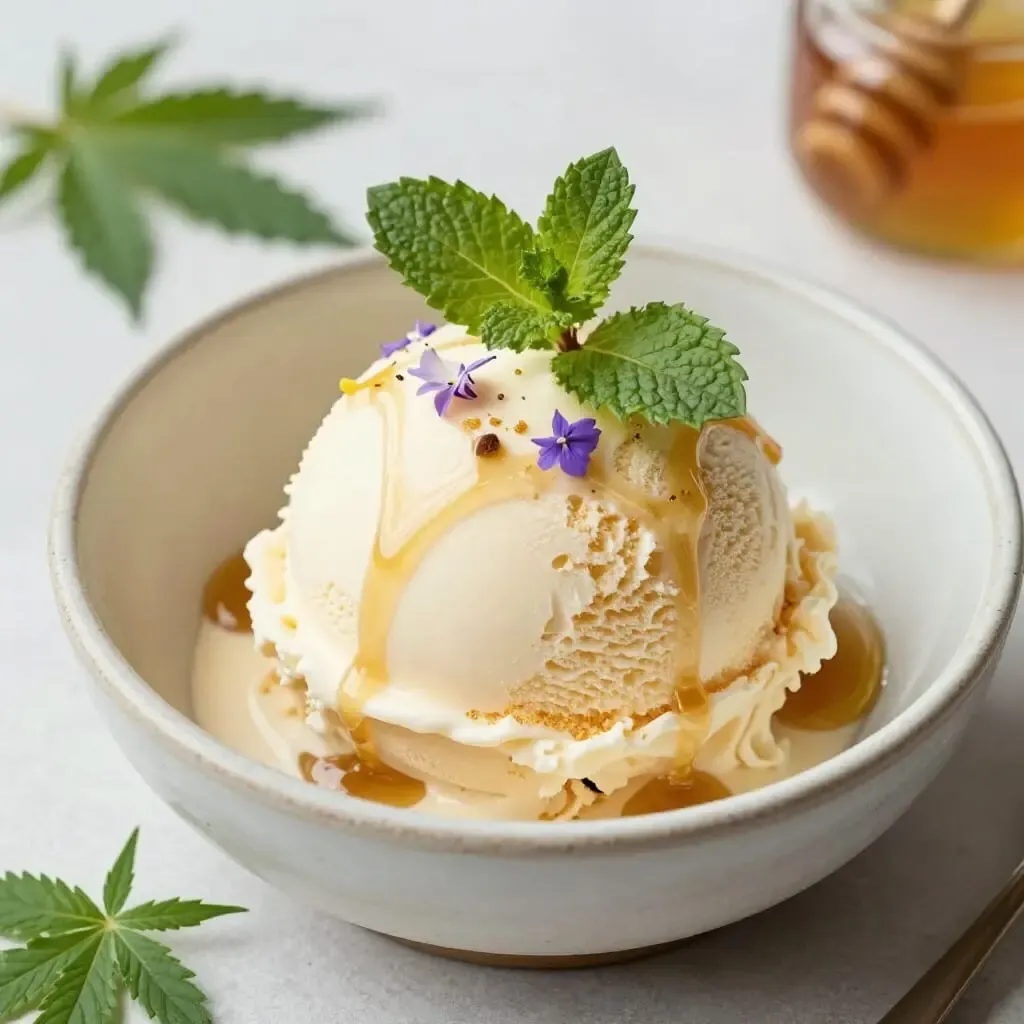
CBD Ice Cream: Recipe, Dosage & Practical Tips
In short
- CBD ice cream is made by infusing a fatty base (cream, coconut milk) with crumbled CBD flower or CBD Oil before freezing
- A reasonable dose typically falls between 5 and 20 mg of CBD per serving, adjusted to individual sensitivity
- Cold doesn’t destroy CBD, but poorly managed freezing can affect the texture of the mixture, especially with an oil-based base
- CBD’s bitterness is best masked with banana, chocolate, or a touch of sugar rather than sweeteners alone
- It’s better to infuse CBD into a fat before sweetening, since Cannabidiol binds far more effectively to lipids than to water
Making CBD ice cream at home involves infusing a creamy base (heavy cream, coconut milk, or mashed banana) with crumbled CBD flower or a few drops of CBD oil, then freezing the mixture into individual portions. It’s a simple, enjoyable way to work CBD into an everyday dessert, without relying on the classic Sublingual Method. The most accessible recipe needs just a handful of ingredients: a fatty base, CBD, a fruit or flavoring to mask the bitterness, and a freezer. The rest comes down to getting the dosage right, choosing the right form of CBD, and avoiding a few freezing pitfalls — which this article walks through step by step.
What is CBD ice cream and why does it work
CBD ice cream is simply a classic frozen dessert with cannabidiol worked in, usually as oil or crumbled flower, before freezing. The principle rests on a simple chemical property: CBD is fat-soluble, meaning it dissolves in fats (cream, butter, coconut oil) far more readily than in water. That’s why heavy cream, rich in fat, makes an ideal base for capturing and evenly distributing the Cannabinoid throughout the dessert.
Contrary to popular belief, freezing CBD doesn’t destroy it or reduce its effects. The cannabinoid stays stable in the cold; it’s mainly light, excessive heat, and air exposure that degrade cannabinoids and Terpenes over time. A well-made batch of CBD ice cream therefore keeps most of its aromatic profile and dosage intact, as long as the CBD was properly infused into the fat beforehand rather than added raw at the last minute. This infusion step, often overlooked by beginners, is what separates ice cream that actually works from ice cream that stays inert.
Basic recipe — homemade CBD ice cream in 4 steps
The simplest recipe for CBD ice cream relies on three main ingredients: 10 g of crumbled CBD flower buds, 500 ml of heavy cream (or a plant-based alternative like coconut cream), and a pinch of salt to balance the flavors. Some variations add 400 g of mashed banana for creaminess and natural sweetness, cutting down on added sweeteners.
The key step is the infusion: gently heat the cream with the crumbled CBD flower, keeping the temperature moderate, for about fifteen minutes, then strain out the plant residue. This gentle, low-temperature Decarboxylation activates the CBD while avoiding scorching the terpenes responsible for the flavor. Let the mixture cool before whisking in the other ingredients (banana, sugar, flavoring), then pour it into molds or an airtight container. Freezing generally takes 4 to 6 hours for a texture that’s firm but still creamy. For a quick version with no ice cream maker needed, pouring the mixture into ice cube trays gives you individual portions that are easy to dose and serve straight up, or drop into a cold drink.
How much CBD per serving of ice cream?
Dosage is the question beginners ask most when making their first batch of CBD ice cream. In practice, a serving usually contains between 5 and 20 mg of CBD, a range that produces a mild relaxing effect without overdoing it. First-timers should aim for the lower end of that range, around 5 to 8 mg per serving, and increase gradually with future batches.
The math is simple: divide the total amount of CBD used in the recipe (in mg, listed on the oil bottle or calculated from the flower’s CBD percentage) by the number of servings you end up with. If you use 10 g of flower at 15% CBD, that’s roughly 1,500 mg of CBD across the whole batch — far too concentrated unless it’s spread across plenty of small portions. It’s better to under-dose the first time and adjust from there than to end up with an overly potent batch, especially if it’s shared with family or friends who each have different tolerance levels.
CBD oil vs. crumbled flower: which base should you cook with
There are two main options for making CBD ice cream: start with a ready-made CBD oil, or infuse crumbled flower directly into the cream. CBD oil has the advantage of being easy to dose drop by drop and requires no extra infusion step — just stir it into the base once it’s cooled slightly, so the cannabinoids aren’t damaged by excessive heat. This is the recommended option for beginners who want a precise, repeatable dose.
Crumbled flower takes more preparation (heating, straining) but delivers a richer aromatic profile, with the terpenes specific to the chosen strain. More experienced makers sometimes use CBD-infused butter or coconut oil, a versatile base that works equally well for baking and for cold frozen preparations. CBD Isolate, a pure crystalline powder, remains a more niche option for home cooking: it’s flavorless but harder to blend evenly than an oil already dissolved in fat.
How to mask CBD’s bitter taste in ice cream
Bitterness is the main barrier to enjoying CBD ice cream, since hemp’s natural terpenes often leave an earthy note at the finish. Several strategies help tone it down effectively. Mashed banana, a staple in homemade CBD ice cream recipes, plays a double role: it adds creaminess and natural sweetness that neutralizes much of the bitterness without relying on added sugar.
Chocolate, caramel, or very ripe berries work on the same principle: their bold, slightly tart or sweet flavors mask CBD’s plant-like note. A pinch of salt, added right at the end, also enhances sweet flavors and reduces the perception of bitterness — much like in a salted caramel recipe. Erythritol is sometimes used in baking to mask aftertastes from sweeteners or bitter extracts, but with CBD, combining a fruit with a fat remains the most natural and effective solution for a homemade batch.
CBD stability in the freezer: what you actually need to know
Contrary to popular belief, freezing doesn’t destroy CBD. Cannabidiol is a fairly stable molecule in the cold; it’s mainly direct light, prolonged air exposure, and high temperatures that speed up its degradation along with that of its accompanying terpenes. CBD ice cream stored in an airtight container, away from light, holds onto its dosage and aromatic profile for several weeks.
The real thing to watch is texture, not CBD potency. If the recipe uses a CBD oil carried in MCT Oil or coconut oil, that carrier can solidify or turn grainy at very low temperatures, making for a less smooth ice cream. To avoid this, it’s best to blend the oil into a base already rich in cream or animal fat, which holds its texture better in the freezer. Also avoid thawing and refreezing the mixture repeatedly: repeated cycles hurt both texture and aroma stability, though they don’t directly affect the cannabinoid content.
Common mistakes to avoid when making CBD ice cream
The first mistake is adding CBD directly, skipping the infusion step in warmed fat. Raw CBD, not bound to a fat, disperses poorly through the mixture and can end up concentrated in a few portions instead of evenly distributed — a real risk if the ice cream is shared among several people.
Second common pitfall: overheating the flower or oil during infusion. Too high a temperature destroys some of the terpenes and gives a harsher taste, without improving CBD activation, which already happens at low temperature over a sufficient time. A third, sneakier mistake: making one large batch with no per-serving dosage marker, which makes it impossible to accurately estimate how much CBD is consumed at each serving. Finally, many beginners skip straining the crumbled flower after infusion: unfiltered plant residue leaves a gritty texture and a stronger taste, undermining the enjoyment you’re going for in a frozen dessert.
Storing homemade CBD ice cream: how long does it keep
Once made, CBD ice cream keeps like any other homemade frozen dessert: in an airtight container, at the back of the freezer rather than in the door, where temperature swings happen more often. Under these conditions, it holds good flavor quality and a stable dose for several weeks, as long as you avoid the thaw-refreeze cycles mentioned earlier.
If you’re making individual portions (ice cube trays or small molds), it’s worth labeling the container with the prep date and the estimated dose per portion, especially if it’s shared with people who don’t have the same tolerance. This simple precaution avoids unpleasant surprises, particularly for CBD newcomers who might underestimate how many portions they’ve eaten. Unlike a bottle of CBD oil, which is mainly vulnerable to light and room-temperature heat, ice cream that’s already frozen is protected from both of those degradation factors for as long as it stays in the freezer — a handy advantage if you want to prep a batch ahead of time.
Why CBD ice cream is winning over more and more fans
CBD ice cream fits into a broader trend of hemp-infused food products, riding a fast-growing market. The CBD-infused food and beverage sector has grown from roughly $7 billion in 2023 to a projected $57 billion-plus by 2032 worldwide, a sign that demand for enjoyable, easy-to-consume formats keeps climbing.
Part of the appeal comes down to the format itself: unlike an oil taken under the tongue, ice cream turns taking CBD into a moment of enjoyment rather than a functional routine. Many people also see it as an easy, low-pressure way to try CBD for the first time, in a familiar and reassuring context. What many are after with this kind of dessert is a sense of relaxation at the end of the day or occasional support for managing stress — without replacing medical advice for a specific therapeutic need. The wide range of possible recipes (banana, chocolate, berries, plant-based bases) also lets everyone tailor their CBD ice cream to their own taste and diet, which helps explain its growing popularity with such a varied audience.
FAQ
How many mg of CBD should I put in homemade ice cream? Aim for 5 to 20 mg of CBD per serving, starting toward the lower end if it’s your first batch, then adjusting based on how you feel.
Does freezing destroy CBD? No, cold doesn’t degrade CBD. It’s light, heat, and prolonged air exposure that damage cannabinoids — not freezing.
Should I use CBD oil or flower for ice cream? CBD oil is easier to dose precisely, while crumbled flower requires an infusion step but delivers richer flavors.
How do you get rid of CBD’s bitter taste in ice cream? Banana, chocolate, or a pinch of salt added at the end effectively tone down the natural bitterness of CBD’s terpenes.
How long does CBD ice cream keep in the freezer? In an airtight container, away from light, it keeps its quality for several weeks, as long as you avoid repeated thaw-refreeze cycles.
Does CBD ice cream get you high? No, CBD has no psychoactive effect unlike THC; this is a dessert geared more toward relaxation and wellbeing.
Can children eat CBD ice cream? No, this type of dessert is for adults only; the dosage and care required aren’t suitable for minors.