CBD Isolate: Definition, Purity & Cooking Uses
Definition
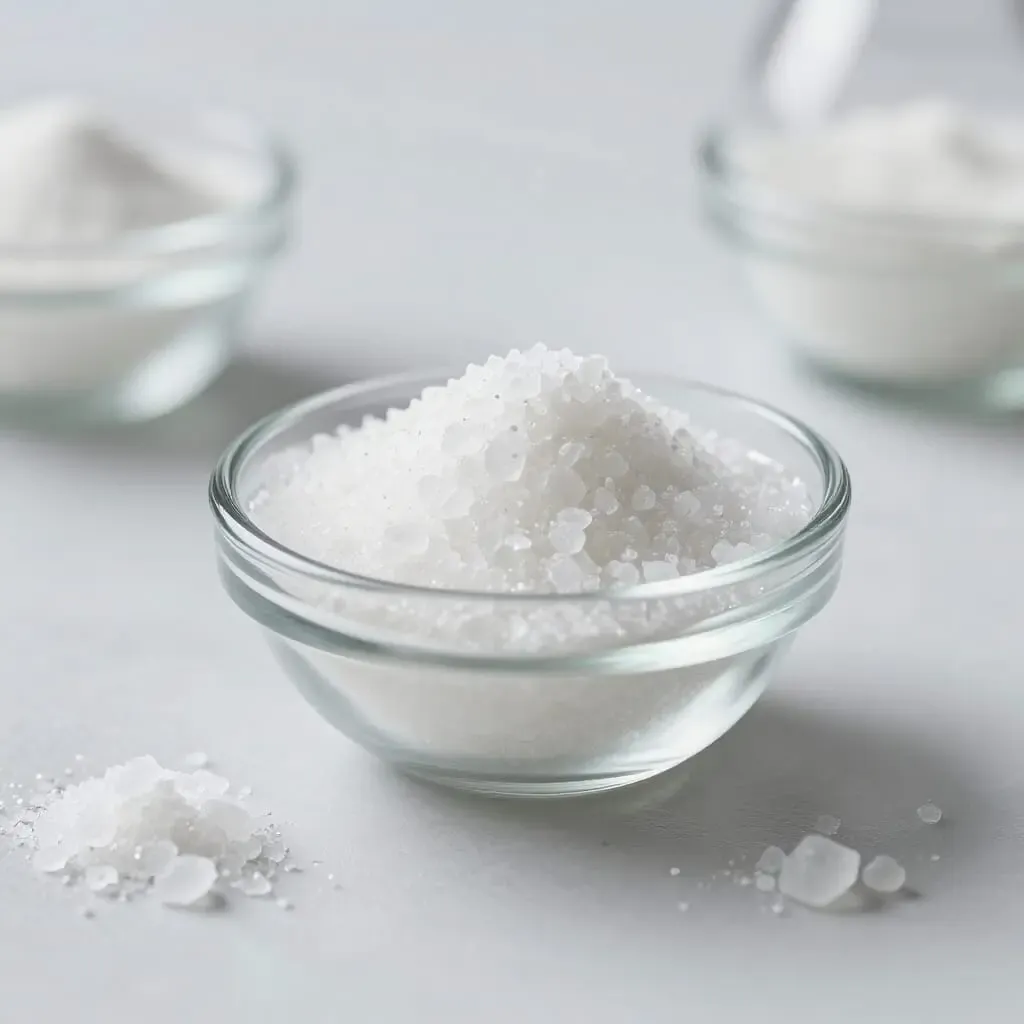
CBD isolate is the most purified form of cannabidiol: a white crystalline extract, over 99% CBD, with no THC, no other cannabinoids, and no terpenes. It’s obtained by carrying the purification process further than what produces a full-spectrum or broad-spectrum extract, isolating the cannabidiol molecule on its own.
How the Term Is Used
Isolate comes as a powder or crystals, with no noticeable taste or smell, making it a discreet ingredient that can be worked into a recipe without altering its aromatic profile. It’s especially well suited to sweet or delicate preparations where the earthy taste of a full-spectrum extract would be noticeable, as well as to people who want to exclude any trace of THC or other cannabinoids from what they consume.
Key Takeaways
- Isolate is made of over 99% pure cannabidiol, in crystalline form.
- It contains no THC, no other cannabinoids, and no terpenes.
- Its lack of taste and smell makes it easy to incorporate discreetly into cooking.
- It represents the end point of the purification process after extraction.
- It doesn’t benefit from the entourage effect hypothesis, which applies to non-isolated extracts.
Related Terms
- Full spectrum — an extract retaining every compound in hemp, including trace THC.
- Broad spectrum — an extract retaining several cannabinoids and terpenes, with no THC.
FAQ
Does CBD isolate have a taste? No, it’s neutral in taste and smell, unlike full-spectrum or broad-spectrum extracts.
Does CBD isolate contain THC? No, it’s entirely free of THC, as well as of other cannabinoids and terpenes.
Is isolate suitable for sweet recipes? Yes, its lack of earthy flavor makes it a good fit for baked goods and drinks where you want to avoid altering the taste.