CBD for Beginners: The Complete Guide to Getting Started
In short
- Start with low doses, ideally 5 to 10 mg per day
- Prioritize transparency with lab reports (CoA) and organic origins
- Choose your consumption method based on desired onset speed
- Consult a healthcare professional before starting a regimen
CBD, or cannabidiol, is a natural compound derived from hemp (Cannabis sativa), non-psychoactive and legal in France provided it contains less than 0.2% THC. For a successful experience, it is recommended to start with a low dose, generally between 5 and 10 mg per day, to assess your tolerance.
CBD products available on the market vary in concentration and form (oils, capsules, creams), but their effectiveness also depends on their transparency: prioritize those accompanied by a lab report (CoA) certifying their purity and organic origin. Before any use, consulting a healthcare professional is essential, especially if you are taking medication or suffer from specific health conditions.
The goal of this guide is to walk you through the process step-by-step, from the basics of CBD to its practical use, including dosages, consumption methods, and precautions. Whether you are looking to relieve muscle pain, manage stress, or simply explore the properties of this molecule, the recommendations presented here are based on scientific data and beginner experience. The goal? To avoid common mistakes and optimize your starting with a low dose approach for progressive and controlled felt effects.
Understanding Cannabidiol: Definition and How It Works
CBD, or cannabidiol, is a cannabinoid extracted from the hemp plant, a variety of Cannabis sativa grown for its low THC (tetrahydrocannabinol) content—the compound responsible for psychoactive effects. Unlike THC, CBD does not induce euphoria or dependency, making it a popular alternative for wellness or therapeutic use.

Its history dates back millennia, with traces of use in traditional Chinese and Indian medicine, but its chemical structure was only elucidated in the 1940s by American researcher Roger Adams. Today, it is studied for its interactions with the human endocannabinoid system, a network of receptors that plays a key role in regulating functions such as sleep, appetite, and pain perception.
For a successful introduction to CBD, it is important to understand its therapeutic potential, which is widely documented by clinical studies. For example, research published in The New England Journal of Medicine (2017) demonstrated that CBD significantly reduced seizures in patients with Lennox-Gastaut syndrome, a severe form of epilepsy resistant to traditional treatments. The results showed a 42% reduction in seizures among certain participants taking Epidiolex®, a CBD-based medication approved by the European Medicines Agency (EMA).
Furthermore, recent work explores its role in neuroprotection: a 2023 study (Cannabidiol in experimental cerebral ischemia) suggests that CBD could limit brain damage following a stroke by reducing inflammation and cellular oxidation. These benefits also extend to managing anxiety and sleep disorders, although the exact mechanisms remain the subject of ongoing research.
The Beginner’s CBD Guide: How to Choose Your Products
Product choice is crucial for safety and effectiveness, especially for beginners. Before making any purchase, it is essential to ensure that the supplier guarantees full transparency regarding their production and testing methods.
This includes the publication of laboratory analysis reports (Certificates of Analysis or CoA), which certify exact CBD concentrations and the absence of contaminants such as heavy metals or residual solvents. These documents also allow you to verify that the product respects the legal limit of 0.2% THC, thereby avoiding any risk of confusion with psychoactive products.
What to Look For When Buying CBD
To ensure product quality, prioritize brands that use organic hemp, grown without pesticides or herbicides. CBD derived from organic farming is not only safer for health, but it also maintains optimal purity and more stable therapeutic properties.
Labels like bio or organic (when available) are good indicators, although regulation may vary by country. In France, where the market is progressively structuring, these criteria are becoming a trusted benchmark for consumers, especially given the growing diversity of CBD products on offer.
The Benefits of CBD
One might wonder why CBD is so successful today, even though it remains a relatively recent compound on the consumer market. The answer lies first in the variety of its applications: from CBD oils to capsules, as well as creams or infusions, each form allows for use adapted to specific needs, whether it be muscle pain, stress, or simply general well-being.
Furthermore, its accessibility has improved considerably in recent years, with an increase in both physical and online points of sale, as well as a positive perception reinforced by user testimonials sharing their experiences regarding felt effects. Finally, its status as a complementary treatment (rather than a medication) makes it an alternative perceived as more natural for those looking to avoid the side effects of traditional pharmaceutical solutions.
How to Take CBD: A Guide for Beginners
Understanding CBD consumption methods is the first step for beginners, as each method offers distinct absorption times and felt effects. CBD products come in several forms: sublingual oils, capsules, edibles, topical creams, or even vaporization. Each option meets specific needs, whether for general well-being, localized pain, or stress management.

For example, CBD oils are often preferred for their ease of use, while creams target skin or muscle problems. Before choosing, it is essential to inform yourself about the available concentrations and recommended dosages, especially to avoid adverse effects related to an improperly adjusted low dose.
Comparison of Administration Methods
| Consumption method | Absorption time | Duration of effects |
|---|---|---|
| Sublingual oils | 15-30 minutes | 3-6 hours |
| Capsules | 30-90 minutes | 4-8 hours |
| Edibles | 30-120 minutes | 4-8 hours |
| Topical creams | Immediate | 2-4 hours |
| Vaporization | Instant | 1-3 hours |
Sublingual oils offer rapid absorption, with perceptible effects within 15 to 30 minutes and a duration of action of 3 to 6 hours. Capsules, on the other hand, take 30 to 90 minutes to act, but their effects persist for 4 to 8 hours, as do edibles, whose absorption time varies from 30 to 120 minutes.
Topical creams act immediately, but their effects are generally limited to 2 to 4 hours, while vaporization provides instant relief with a duration of 1 to 3 hours.
Topical Products
The use of CBD-based creams and topicals is very common for treating muscle pain or localized skin problems. These CBD products act directly on the affected area without passing through the digestive system, allowing for immediate and targeted use. Unlike oils or capsules, their effect is generally shorter, with a duration of action between 2 and 4 hours.
They are particularly appreciated for their convenience and the absence of systemic effects, making them suitable for people seeking targeted treatments without altering their daily experience. Their base is often enriched with other active ingredients, such as essential oils or soothing agents, to enhance their properties.
- CBD oils for general well-being
- Capsules for simple and precise ingestion
- Creams for muscle pain
- Gummies for convenient and tasty consumption
CBD Vaping Guide for Beginners: Tips & Tricks
People often ask why they should vape CBD rather than ingest it, given that oils or capsules remain popular. Vaporization is distinguished by its rapid absorption: when inhaling vapor, CBD passes directly into the lungs before being absorbed into the bloodstream, allowing users to feel the felt effects within minutes, compared to 30 minutes to 2 hours for ingested oil.
This method is also ideal for those seeking targeted action, such as relieving passing stress or soothing occasional muscle pain, without waiting for full digestion. Finally, the discretion and practicality of vaporization devices—compact and without strong odors—make them a practical choice for daily use or on the go, far from the constraints associated with ingestible products.
This complete guide for beginners wishing to vape highlights another key advantage: precise dosage control. Unlike oils or capsules, where the dose is fixed, an e-cigarette allows you to adjust the amount of inhaled CBD with every puff, which is essential for finding the ideal dose without the risk of overdoing it.
This flexibility is particularly useful for new users, whose experience with CBD varies according to individual sensitivity. By starting with a low dose and progressing gradually, you optimize the desired benefits—whether it be relaxation, sleep support, or an anti-inflammatory effect—while minimizing the risk of adverse effects.
Tips for Beginners: Dosage and Use
To approach CBD use calmly, dosage and the method of administration are the first elements to master. CBD products come in different forms—oils, capsules, creams—each adapted to specific needs, but all subject to a common rule: start with a low dose to assess your tolerance and felt effects. This progressive approach limits the risk of discomfort and allows you to adjust your use based on how you feel, whether it’s stress, muscle pain, or a simple need for relaxation.
What is the Recommended Dosage to Start?
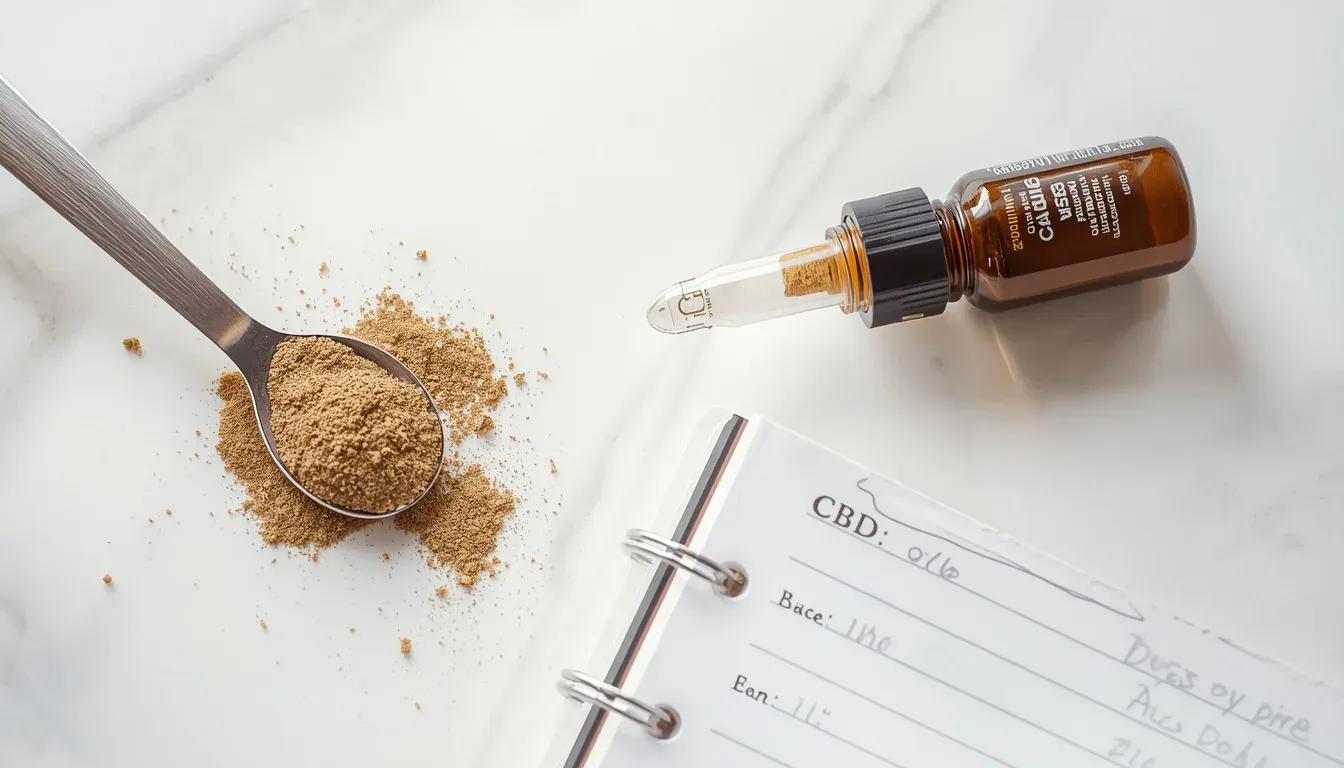
To know how much CBD should I take, start small: recommendations for beginners suggest an initial dose of 5 to 10 mg per day. This range, often cited as an ideal starting point, allows you to test your body’s reaction without overloading it. CBD oils or capsules are particularly well-suited for this first step, as they offer precise concentration and controlled absorption.
It is essential to note that CBD affects individuals differently: some will feel the benefits from the very first doses, while others will require gradual adjustment. The goal is not to aim for an immediate effect, but to identify the minimum effective dose for your personal experience.
How to Use CBD Products Correctly
Learning how to use CBD products correctly relies on three basic principles. First, start with a low dose: initiating use with 5 to 10 mg allows you to assess tolerance without risk. Next, increase the dosage gradually if necessary, spacing adjustments by at least one week to observe the felt effects.
Finally, if you are currently undergoing treatments or have health problems, it is advised to consult a professional before starting, especially if the CBD products are combined with other medications. This precaution is even more crucial as interactions, though rare, can vary depending on the concentrations and forms (oils, creams, etc.).
Following best practices for taking CBD also requires patience. The properties of cannabidiol do not manifest instantly: it may take several days, or even weeks, to fully feel its benefits, especially in cases of chronic pain or sleep disorders. Keeping a journal of the doses taken and the observed effects helps refine your use.
For example, a CBD Oil with a 15% concentration might require one drop in the morning and one in the evening, while a 25 mg capsule might suffice for a single dose. The ideal is to adapt the rhythm to your lifestyle and your specific problems, without neglecting advice from a pharmacist or specialist for sensitive profiles.
Precautions, Side Effects, and Legality
Many novices ask: is CBD legal in France? As of 2024, legislation strictly regulates CBD products containing less than 0.2% THC, in accordance with European regulations. CBD oils, capsules, and other forms (such as creams) are authorized for sale and consumption, provided they respect this limit.
However, their commercialization remains subject to reinforced controls, particularly to avoid any confusion with illegal substances. THC concentrations must be clearly indicated on the packaging, and products cannot be presented as having therapeutic virtues unless there is medical advice. France has applied these rules with increased vigilance since 2022, following legislative adjustments aimed at clarifying the legal framework.
One must ask if CBD has side effects, although these are generally mild and well-tolerated. According to a study published in Cannabidiol Adverse Effects and Toxicity (2019), the most commonly reported felt effects include dry mouth, slight drowsiness, or digestive issues, especially at high doses.
Another study on Cannabidiol and addiction (2023) highlights that interactions with other medications (such as anticoagulants or antidepressants) can modify their metabolism, requiring increased caution. The properties of CBD can also vary between individuals, hence the importance of adjusting dosages gradually. In rare cases, adverse effects such as dizziness or a drop in blood pressure have been reported, but they remain exceptional.
An essential question: can you take CBD with other medications? The answer depends on your current treatments, as CBD can influence cytochrome P450, a key liver enzyme responsible for the metabolism of many active ingredients. For example, it is advised not to combine CBD with medications such as warfarin (an anticoagulant) or certain anticonvulsants without medical advice, as this could alter their effectiveness or toxicity.
When in doubt, consulting a health professional is indispensable, especially for people under therapies or suffering from chronic pathologies. Even if CBD is perceived as safe, its interaction with other substances remains a problem that should not be neglected, which is why the recommendation is to start with a low dose and observe the felt effects before any prolonged use.
FAQ
Is CBD legal in France? Yes, CBD is legal in France as long as the THC content remains below the regulatory thresholds.
What is the recommended dosage to start? It is recommended to start with a low dose, between 5 and 10 mg of CBD per day.
Does CBD cause psychoactive effects? No, CBD is not a psychoactive substance and does not cause a “high.”
Does CBD have side effects? While generally well-tolerated, some may experience minor effects depending on the dose.
Can you take CBD with other medications? It is imperative to consult a doctor, as CBD can interact with certain treatments.
How do I choose a high-quality CBD product? Check for the presence of lab reports (CoA) and prioritize clean extraction methods.
Sources
- PubMed - Cannabidiol Adverse Effects and Toxicity
- PubMed - Effect of Cannabidiol on Drop Seizures
- Ivory Swiss - Guide pour débutants CBD
- Barong CBD - Guide pour les débutants
- Boutiques-CBD - Comment prendre du CBD
- Amazing CBD - Guide complet vapotage