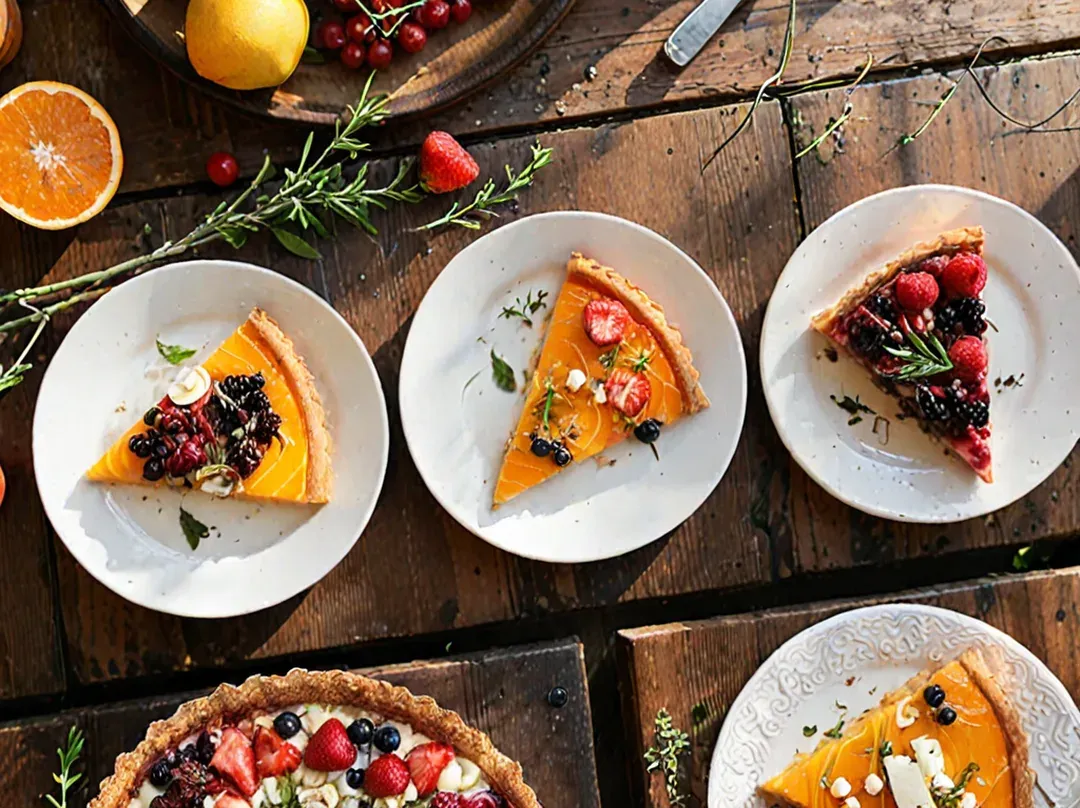
Sweet and Savory Tart Recipes: Easy Ideas & Tips
In short
- Savory tarts are more popular than sweet tarts in France.
- Savory tarts are a communal dish, mostly enjoyed at home.
- Homemade shortcrust pastry is the ideal base for most recipes.
- Savory tarts can be enjoyed year-round, while sweet ones are more popular in summer.
In France, tarts hold a central place in the diet, but with a clear preference for savory: 91% of consumers eat them regularly, compared to 86% for sweet tarts. This communal dish, often prepared at home, embodies a deeply rooted culinary tradition where homemade shortcrust pastry remains the essential base for most recipes.
While savory tarts are savored all year long—particularly in winter (77%) and spring (75%)—sweet tarts are generally reserved for milder seasons, such as summer (80%) and spring (76%). To find easy and quick sweet and savory tart recipes, one must draw inspiration from this seasonal and technical duality, where homemade versions dominate, though ready-made options are also gaining popularity.
The difference between savory and sweet tarts isn’t just about flavor; it is also reflected in preparation habits. 83% of French people cook their savory tarts at home, compared to 78% for sweet ones, while 42% opt for ready-made versions in the former case, versus 55% in the latter.
This trend reveals a preference for controlling ingredients and textures in savory dishes, which are often associated with more elaborate recipes (quiches, pies), whereas sweet tarts, being lighter, allow for more practical compromises. Yet, both categories share a common thread: their central role in family meals or social gatherings, where they symbolize both comfort and creativity.
Tart consumption habits in France
France stands out as a country where savory tarts take center stage in terms of consumption, with 91% of French people enjoying them regularly, compared to 86% for sweet tarts.
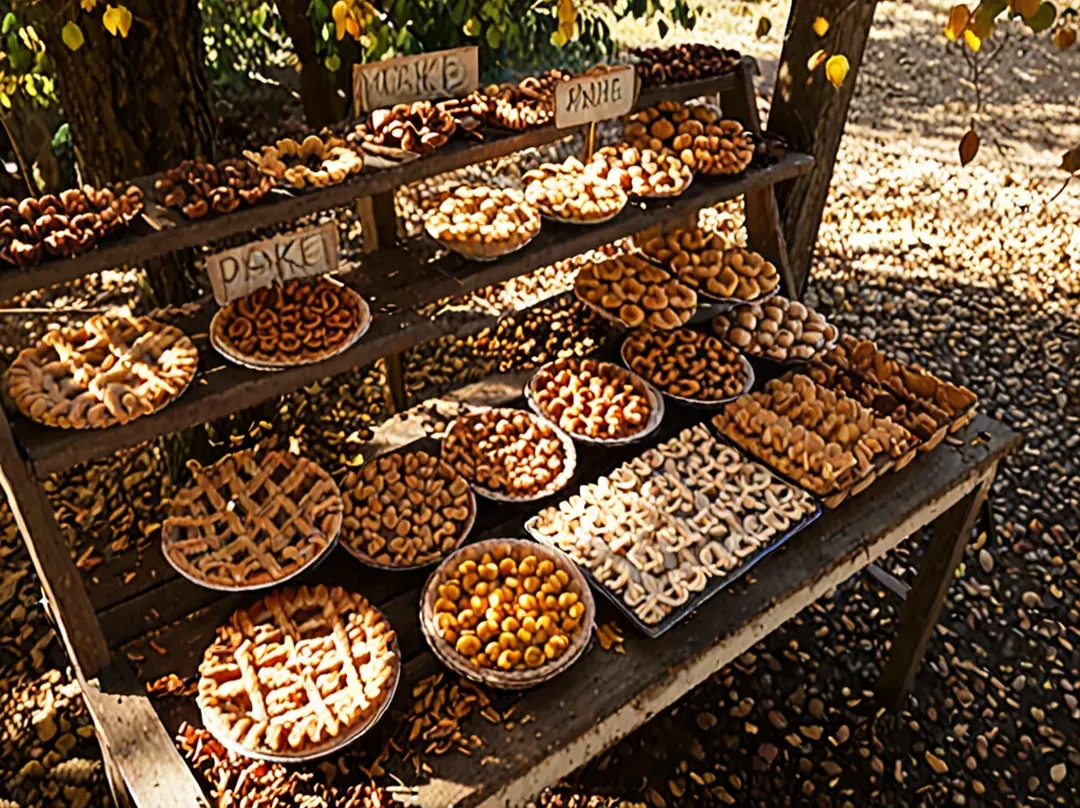
This preference is explained by their versatility and their ability to adapt to any meal, from lunch to an evening with friends. To find easy and quick sweet and savory tart recipes, it is essential to understand that French consumers prioritize savory not only for its comforting nature but also for its ease of preparation, which is often perceived as less technical than making desserts.
Whether they are tomato, vegetable, or meat-based, savory tarts represent a perfect balance between simplicity and indulgence, making them accessible to both beginners and experienced cooks.
The preparation method reflects this duality between tradition and practicality. 83% of savory tart consumers make them at home, compared to 78% for sweet tarts—a gap that highlights the importance of homemade cooking for savory dishes, which are often associated with more rustic and customizable recipes.
Conversely, 42% of French people buy ready-made savory tarts, compared to 55% for sweet ones, indicating a higher tolerance for industrial versions in the dessert category. This difference is partly due to the perception of savory tarts as more “expert” dishes, where mastering the pastry or the fillings plays a key role in their success.
Tart consumption follows a distinct seasonal rhythm, with clear peaks depending on their type. Savory tarts, being timeless, appeal to 77% of those surveyed in winter, 75% in spring, and remain popular in summer and autumn (70%). In contrast, sweet tarts are more summer-oriented, enjoyed by 80% of French people in summer and 76% in spring, before losing appeal during the colder months.
This distribution illustrates how sweet and savory tarts, which are hybrid by nature, could bridge this seasonal gap: their balance of sweetness and savory flavors makes them ideal alternatives for periods when classic desserts seem less suitable, such as autumn months or chilly early winter days.
| Tart Type | Consumption (%) | Homemade Ratio (%) | Eaten at Home (%) |
|---|---|---|---|
| Savory | 91 % | 83 % | 71 % |
| Sweet | 86 % | 78 % | 48 % |
Mastering the base: preparing homemade shortcrust pastry
The success of a sweet-savory tart relies primarily on a well-balanced homemade shortcrust pastry. For a classic version, 150g of flour, 75g of soft butter, 1 pinch of fine salt, and 4cl of warm water (or milk) are sufficient. These proportions guarantee a crispy texture without excessive fat, while remaining easy to roll out.
The key lies in the homogeneity of the mixture: ingredients must be incorporated quickly to prevent the butter from melting prematurely. Once the dough is formed, it should be rolled out thinly between two sheets of plastic wrap to make it easier to place in the mold. This preliminary step prevents tearing and ensures even baking, even for the most generous tarts.
The preparation technique directly influences the final texture. After mixing the ingredients for 1 minute using a food processor or by hand, the dough must rest in the refrigerator for 30 minutes. This resting time is crucial: it allows the flour fibers to relax and the butter to redistribute evenly, preventing a crust that is too dense or has soft spots.
For an even lighter tart, some add 1 tablespoon of icing sugar to the flour, but this variant remains optional depending on taste. Once rested, the dough should be rolled out without excessive pressure to maintain its airiness and fragility—two essential qualities for a tart that can be enjoyed both hot and lukewarm.
- Mix the ingredients (150g flour, 75g butter, salt, 4cl water/milk) for 1 minute using a food processor or by hand.
- Let the dough rest in the refrigerator for 30 minutes.
How to make a sweet and savory tart?
To create an original sweet-savory tart recipe, focus on the sweet-savory pairing, a combination that delights through its subtle balance. Fresh goat cheese or grated Comté, paired with fruits like pear or apple, adds a creamy and tangy touch that contrasts with the sweetness. A pinch of fleur de sel or liquid honey can enhance these contrasts by elevating the flavors without overpowering the ingredients.
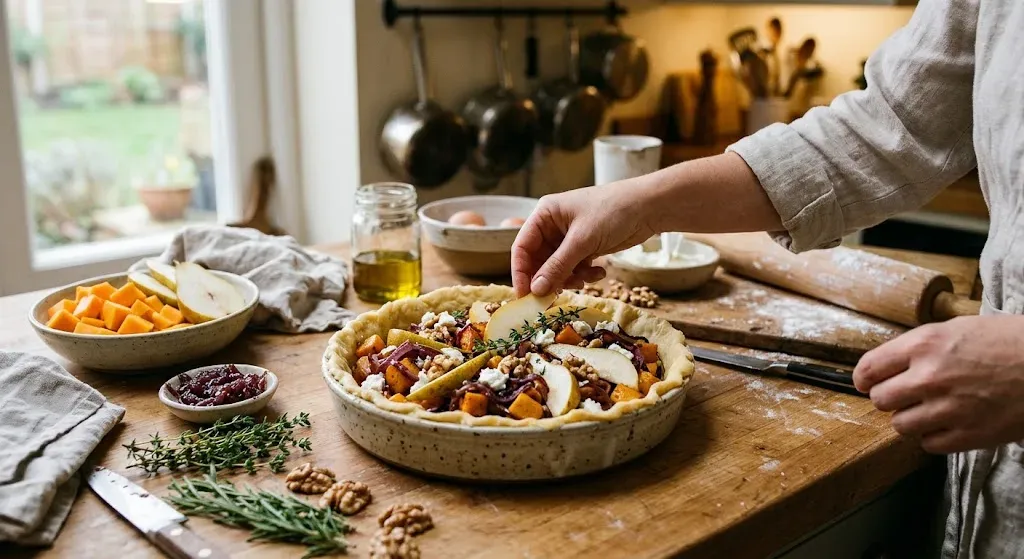
The secret lies in the proportions: using one-third sweet seasoning (fruit, caramel) to two-thirds savory components (cheese, bacon, nuts) prevents the tart from becoming too sweet or too salty. Spices like cinnamon or ginger, added in small quantities, provide an aromatic dimension that adds complexity to the recipe without dominating it.
Our best savory tart recipes
Sweet-savory tarts offer endless combinations to satisfy every craving, whether for light appetizers, main courses, or reinvented desserts. Fillings can play with textures (crispy, melting, creamy) and flavor contrasts, such as the acidity of tomatoes against the richness of crème fraîche, or the bitterness of spinach softened by cheese.
Seasonal vegetables, animal proteins, or gourmet ingredients like honey or nuts allow for innovation without excessive complexity. For a vegetarian savory tart recipe, use fresh vegetables, blue cheeses, or aromatic herbs to balance the dish.
Savory tart recipes with meat or fish
Meat or fish-based savory tarts remain reliable classics, ideal for a convivial meal or a quick lunch. Among the classics, the peas and haddock meringue tart (40 min, easy level) combines the sweetness of vegetables with the salty flavor of fish, while the spinach, feta, and chicken tart (20 min, easy level) relies on the crunch of cheese and the tenderness of poultry.
For a more original version, the barbecue zucchini tart (45 min, medium level) marries the grilled flavor of vegetables with a smoky touch, perfect for lovers of bold flavors.
These recipes often rely on shortcrust or puff pastry, light crème fraîche, and spices like paprika or nutmeg to enhance the fillings. A tuna savory tart, for example, combines puff pastry, a can of tuna in water, three eggs, a carton of liquid cream (20 to 25 cl), two tomatoes, and a pinch of nutmeg, all baked until the filling is creamy and lightly golden.
Savory tart recipe: the vegetarian option
Vegetarian tarts prove that it is possible to skip meat or fish without sacrificing flavor. Seasonal vegetables, such as zucchini, leeks, or red kuri squash, become the stars of the recipes, elevated by melting cheeses or fresh herbs. Among the most popular ideas, the hummus, radish, and zucchini appetizer tart (30 min, easy level) offers a perfect balance between creamy and crunchy, while mini leek and parmesan tartlets (20 min, easy level) appeal through their simplicity and melt-in-the-mouth texture.
For a more original touch, the parmesan and peanut shortcrust tart (40 min, expert level) pairs the crunch of toasted nuts with the creaminess of cheese, while the warm goat cheese and zucchini tartine (10 min, easy level) can be enjoyed as an appetizer or a light meal.
Autumn flavor lovers will enjoy the red kuri squash and fresh goat cheese tart (20 min, easy level), where the vegetable pairs perfectly with the mildness of the cheese, or the kale and turmeric savory tart (20 min, easy level), which brings a spicy, colorful note. Finally, the tomato and ricotta tart (15 min, easy level) evokes Mediterranean flavors with its tangy and creamy blend.
What is Cyril Lignac’s savory tart recipe?
Chef Cyril Lignac offers a reinvented version of the Tatin tart, adapted for summer vegetables like eggplant. To avoid a soggy crust, he slices the eggplant into rounds about 0.8 cm thick, salts them lightly, and lets them drain for 5 to 10 minutes before arranging them on the pastry. This technique helps control moisture and achieve a melting texture without weighing down the preparation. The recipe also relies on gentle oven caramelization to enhance the flavors while maintaining a firm structure.
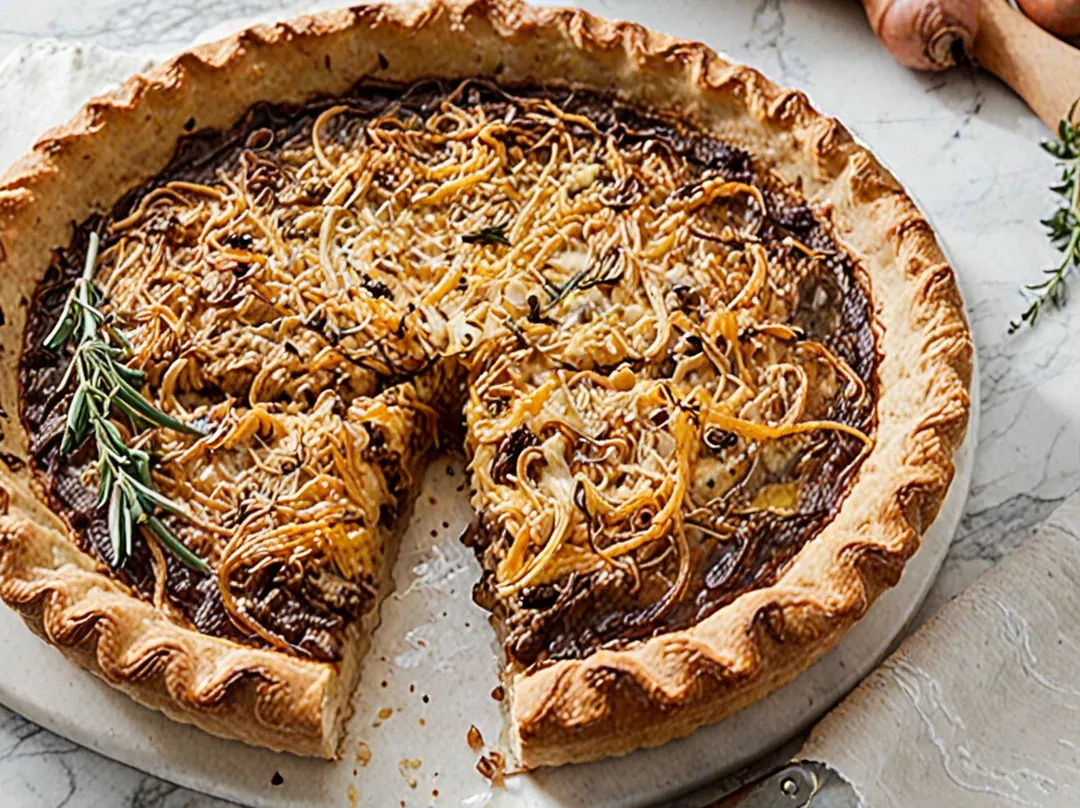
His tomato-mustard tart, emblematic of his bold approach, uses a 26 cm puff pastry with a 2 cm border. After baking at 190°C for 20 minutes, it reveals a combination of mustard, honey-caramelized onions, beefsteak tomatoes in a rosette pattern, green olives, capers, grated parmesan, and fresh basil. The balance between acidity, umami, and sweetness makes it a versatile recipe, suitable for both light meals and appetizers.
For winter, Cyril Lignac focuses on a root vegetable and goat cheese tart, where 100g of fresh cheese and 2 tablespoons of liquid honey add a creamy touch.
The base ingredients include 1 bunch of carrots, 1 parsnip, 1 rutabaga, 2 tablespoons of apple cider vinegar, 2 cloves of garlic, and a few thyme sprigs, all cooked at 180°C. This recipe plays on textural contrasts—melting vegetables and creamy cheese—while exploiting the earthy and fruity flavors of seasonal produce.
Gourmet selection: seasonal fruit sweet tart recipes
Seasonal fruit sweet tarts offer a delicious way to showcase the natural flavors of fruit while adapting to climatic variations. Whether for a light summer dessert or a comforting autumn recipe, these preparations allow you to celebrate local produce at its peak. Their ease of execution and versatility make them staples for both pastry enthusiasts and kitchen beginners.
A summer fruit sweet tart recipe
For a fruit sweet tart recipe, turn to blueberries, whose tangy sweetness pairs perfectly with a crispy crust. A blueberry tart for 8 people requires 15 minutes of prep time and 45 minutes of cook time, with the pastry pre-baked at 180°C for 10 minutes, then cooked in stages of 15 and 20 minutes.
Key ingredients include 800g of blueberries, 80g of almond powder, 15cl of 30% fat liquid cream, and 80g of sugar, all combined with 2 eggs for a creamy texture. This summer dessert, both fruity and melting, appeals through its balance of acidity and sweetness.
A quick daily sweet tart recipe
If you are looking for a quick sweet tart recipe, Key Lime Pie is an ideal choice for an express dessert. For 6 people, it requires 30 minutes of prep time and only 8 minutes of cooking at 175°C, making it a perfect option for a snack or an improvised dessert.
The base consists of 300g of crushed shortbread cookies, 60g of melted butter, and 18cl of lime juice (the equivalent of 6 to 8 limes), enriched with 60cl of sweetened condensed milk and 100g of thick crème fraîche. The final touch of whipped cream and lime zest adds freshness and elegance with no effort.
An autumn sweet tart recipe to warm up
The autumn sweet tart recipe features pumpkin, an iconic ingredient of winter flavors. For 8 people, this tart requires 25 minutes of prep time, followed by 1 hour of refrigeration, before a two-stage baking process: 20 minutes at 170°C, then 20 and 12 minutes at 180°C.
The pastry, made with 150g of spelt flour, 75g of almond powder, and 75g of warm water, frames a filling made of 350g of butternut squash puree, 180g of silken tofu (or crème fraîche), 100g of light brown sugar, and 3 eggs, all seasoned with a spice blend like cinnamon, ginger, or cloves. The result is a soft, fragrant, and comforting tart, perfect for chilly evenings.
FAQ
What is an original and easy savory tart to make? A seasonal vegetable tart with goat cheese is a simple and original option.
How do you make a sweet and savory tart? Simply pair ingredients like cheese and honey on a shortcrust pastry base.
What is Cyril Lignac’s savory tart recipe? The chef offers a tomato-mustard tart or an eggplant Tatin tart.
What are the best homemade tart recipes? Classics like tuna tart or apple tart remain the most popular.
How can I prevent the pastry from becoming soggy? To avoid soggy pastry, you can pre-bake the crust or use vegetables that have been drained of excess moisture.
Sources
- Fresh fruits and vegetables - Tarts and the French – lesfruitsetlegumesfrais.com
- Elle Adore - Cyril Lignac’s savory Tatin tart
- Top Santé - Tomato-mustard tart recipe – topsante.com
- Cosmopolitan - Winter savory tart