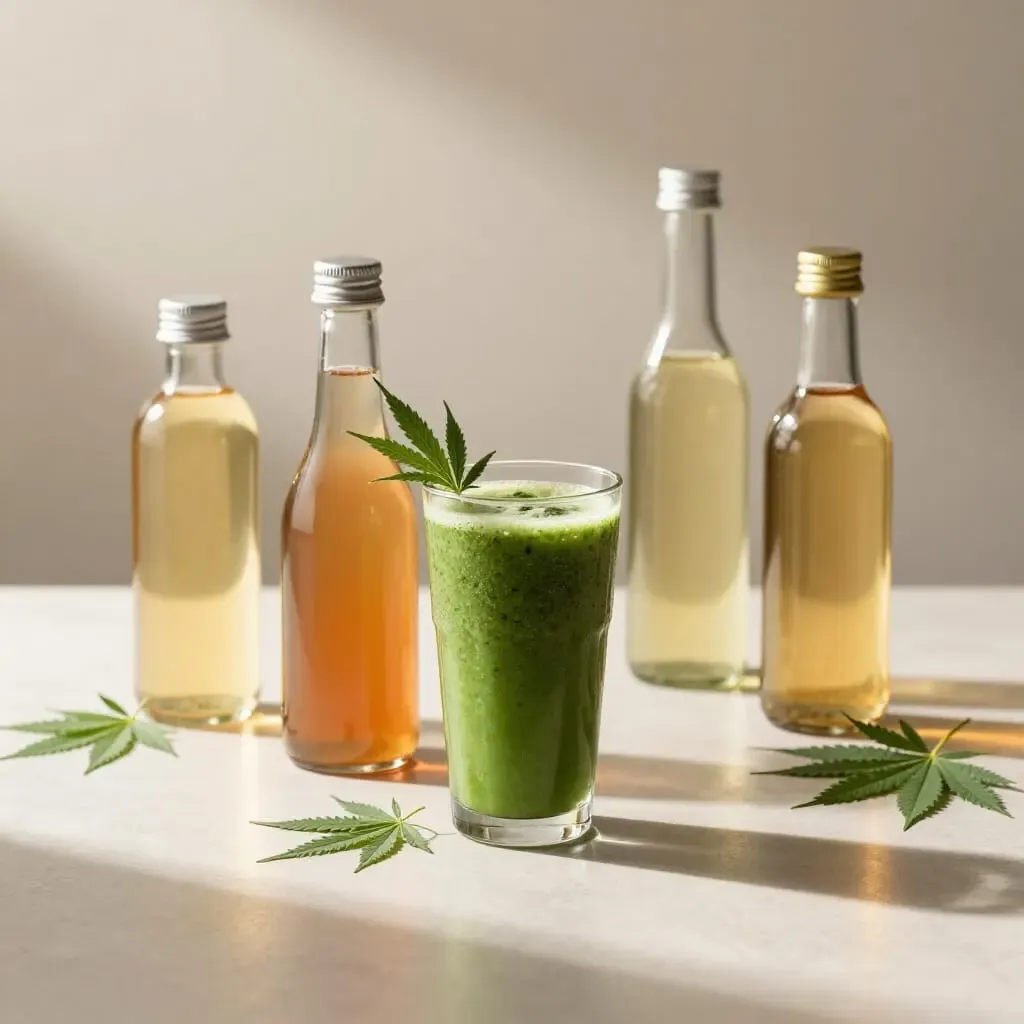
CBD Drinks Guide: Effects, Legality, Dosage & Recipes
At a Glance
- A CBD drink (tea, soda, mocktail) is legal in most places as long as it contains little to no THC — but the exact threshold and rules vary by country
- In the EU, ingestible CBD products like teas and infusions fall under the Novel Food regulation, which has tightened market requirements in recent years
- CBD can cause drowsiness and reduced alertness, but no risk of overdose or dependence has been identified
- A roadside saliva drug test can still come back positive for THC several days after consumption, even with no noticeable effect
- Making your own drink with a culinary CBD Oil lets you control the dosage and the quality of the ingredients
A CBD drink is a preparation — tea, soda, mocktail, or flavored water — infused with Cannabidiol, a compound extracted from hemp that doesn’t produce the psychoactive effects associated with THC. Its legal status depends on where you live: most countries set a maximum THC threshold, and in the EU, products meant to be ingested, including teas and infusions, have come under stricter oversight through the Novel Food regulation. In terms of effects, CBD can promote relaxation or help with falling asleep, with mild drowsiness as a possible downside, but no known risk of overdose or dependence. This guide covers the current legal landscape, dosage, precautions to know before driving, and how to make your own drink with a culinary CBD oil.
What Is a CBD Drink?
A CBD drink is a liquid product — hot or cold — into which cannabidiol has been incorporated, usually as an extract or emulsified oil. Unlike flower or resin, a drink allows for discreet, measured consumption with no smoking or vaping involved.
Several product categories exist on the market:
- CBD teas and infusions, often paired with chamomile, lemon balm, or lavender
- CBD-infused sodas and sparkling drinks, marketed as an alcohol-free alternative
- Flavored “CBD waters” made with water-soluble CBD
- Alcohol-free mocktails and cocktails made with culinary CBD oil
- Hot drinks like golden milk or hot chocolate with a few drops of CBD oil added
What all these products have in common is CBD’s limited oral Bioavailability: part of the molecule is broken down by the liver before it reaches the bloodstream, which is why the effects of a drink are generally milder and slower to appear than with a sublingual dose.
Are CBD Drinks Legal in 2026?
CBD drink legality — and the THC threshold that defines it — varies significantly from one country to another, so there’s no single answer that applies everywhere.
In the European Union, CBD products are generally legal as long as they contain no more than around 0.2–0.3% THC (the exact figure depends on the member state), a limit rooted in EU hemp cultivation rules and confirmed by EU case law. A more recent shift concerns ingestible forms specifically: oils, capsules, gummies, and teas fall under the EU’s Novel Food regulation, which requires products to receive prior market authorization. This doesn’t make consumption illegal for individuals, but it does restrict which products a seller can legally offer, and it doesn’t apply to CBD flower, resin, cosmetics, or e-liquids.
In the United States, hemp-derived CBD has been federally legal since the 2018 Farm Bill, which sets the threshold at 0.3% delta-9 THC on a dry-weight basis. Individual states set their own additional rules for hemp beverages specifically, however — some allow several milligrams of THC per serving, others are far more restrictive — so it’s worth checking local law before buying or shipping a CBD drink across state lines.
In the United Kingdom, CBD food and drink products require Novel Food authorization from the Food Standards Agency, and the permitted THC content is capped at a very low level (around 1 mg per container).
Given this patchwork of rules, it’s worth checking with the seller that a CBD drink has the relevant market authorization — an EU Novel Food filing, US compliance with the Farm Bill and applicable state law, or UK FSA authorization — rather than relying on the label alone.
Effects and Safety: What the Research Shows
CBD is generally well tolerated, but it isn’t free of side effects. The most commonly reported are drowsiness, fatigue, reduced appetite, and, less often, digestive upset. No data to date points to a risk of overdose or dependence, unlike some other active substances.
One point worth watching is drug interactions: CBD can alter the blood concentration of certain medications taken alongside it, mainly through its effect on liver enzymes. It’s recommended to check with a healthcare provider about compatibility with any ongoing treatment before regularly consuming CBD drinks.
On the question of reproduction, animal studies have shown potentially harmful effects on fertility and neurodevelopment, which has led health authorities to classify CBD as a substance presumed to be toxic to human reproduction. This warrants particular caution during pregnancy, breastfeeding, or when trying to conceive.
Finally, another risk has less to do with CBD itself than with the quality of the products sold: several analyses have found that the actual composition of some drinks doesn’t always match what’s stated on the label, sometimes revealing undeclared traces of THC or synthetic cannabinoids.
What Dosage for a CBD Drink?
There’s no universal dose, but the European Food Safety Authority (EFSA) has published a provisional safe daily intake that’s quite low — around 0.0275 mg per kilogram of body weight per day, which works out to roughly 2 mg per day for an average 70 kg adult. Part of the industry considers this figure overly restrictive, pointing to hemp’s long history of traditional consumption in Europe. In the UK, the Food Standards Agency has previously recommended a daily intake of around 10 mg for an adult, a figure currently under review.
In practice, for an occasional CBD drink, the safest rule is to start with a small amount — a few milligrams — and observe your reaction before gradually increasing it. The effects of a drink usually take longer to appear than those of an oil taken under the tongue, which can tempt you to take more too soon. It’s best to wait at least an hour before judging the real effect.
Driving and Roadside Drug Testing After a CBD Drink
No regulation specifically bans driving after drinking a CBD beverage, but caution is warranted. The generally accepted recommendation is to wait six to seven hours before getting behind the wheel, because of the drowsiness CBD can cause — especially when it’s combined with relaxing herbs like lemon balm or chamomile in a tea.
The most important point concerns drug testing: a roadside saliva test looks for THC, not CBD. Even a drink that meets the legal THC threshold can, in theory, leave a trace large enough to trigger a positive result days after consumption, with no effect actually felt. Where local law provides for it, a positive roadside result may be followed by a confirmatory blood test, but penalties still apply if that result is confirmed — regardless of the “natural” origin of the product consumed.
How to Choose a High-Quality CBD Drink
Given how inconsistent product composition can be across the market, a few criteria help avoid unpleasant surprises:
- Choose a brand that publishes a certificate of analysis from an independent lab, showing the exact CBD and THC content
- Check the traceability of the raw material used, ideally sourced from hemp varieties listed on the EU’s common catalogue
- Be wary of drinks whose labeling doesn’t state the CBD quantity per serving or the extraction method
- Avoid products sold with no stated origin, particularly online, where oversight is harder to enforce
- Where available, prefer products sold through pharmacies, where origin and dosage are subject to stricter control
For consumers who want to stay in control of quality, making your own drink with a culinary CBD oil remains the most reliable option: the dosage is known, the origin is verifiable, and the product is designed specifically for food use.
Making Your Own CBD Drink at Home with a Culinary Oil
A culinary CBD oil differs from a standard sublingual oil in its formulation, which is designed to be mixed into a recipe rather than taken straight under the tongue. It’s easy to use in several types of drinks:
- Hot tea: add a few drops of culinary CBD oil to a warm (never boiling) tea blended with chamomile or lavender, to preserve the cannabinoids
- Mocktail: mix the oil into a syrup or a fatty base (milk, coconut cream) before adding it to the drink, since CBD is fat-soluble and doesn’t blend well into a purely watery liquid
- Golden milk or hot chocolate: stir the oil in at the end, once the drink has cooled slightly
- Smoothie: combine the oil with a fat-rich fruit like avocado or a spoonful of cashew butter to improve absorption — see our dedicated guide to CBD smoothies for dosing and full recipes
What all these preparations have in common is pairing CBD with a fat, which markedly improves its absorption compared to simply diluting it in water. It’s also best to avoid exposing the oil to very high heat, which can degrade some of the cannabinoids.
Special Precautions Before Consuming
Certain situations call for extra caution before regularly consuming CBD drinks. Pregnancy and breastfeeding are among the most commonly cited contraindications, given the potential effects on fetal development seen in animal studies. People on long-term medication should also seek advice from a healthcare provider, especially for treatments with a narrow therapeutic margin.
Lastly, CBD drinks shouldn’t be treated as a substitute for medical treatment. The only CBD-based medication with regulatory approval — Epidyolex, marketed as Epidiolex in the US — is reserved for specific indications and available only by prescription, underscoring the difference in status between everyday food use and closely regulated therapeutic use.
FAQ
Can a CBD drink help you sleep? It can promote relaxation and help some people fall asleep, but the effect varies a lot depending on the dosage, individual sensitivity, and other ingredients in the drink, such as chamomile or lemon balm.
How long do the effects of a CBD drink last? The effects appear more slowly than with a sublingual dose, typically within 30 to 90 minutes, and can last several hours due to the gradual digestion of CBD.
Can you drink a CBD beverage every day? Daily consumption is possible for most healthy adults, provided you stick to a moderate dosage and watch for possible interactions with any current medication.
Can a CBD drink cause you to fail a roadside drug test? Yes — a saliva test looks for THC, and even a trace within the legal limit can be enough to trigger a positive result several days after consumption.
What’s the difference between a CBD drink and a THC drink? CBD has no psychoactive effect and is legal in most countries below the applicable THC threshold, whereas THC remains tightly regulated or banned outside authorized medical or, in some US states, adult-use frameworks.
Are CBD drinks sold in supermarkets? They’re still mostly sold through specialty shops, pharmacies, and online retailers; supermarket availability remains limited in many markets, partly due to the tighter Novel Food-style oversight now applied to ingestible CBD products in places like the EU.
Can you make your own CBD drink with culinary oil? Yes — it’s a reliable option that lets you control dosage and quality, as long as you pair the oil with a fat and avoid excessive heat, which would degrade the cannabinoids.
Sources
- EU sets first provisional safety limit for CBD under novel food regulation — Nutrition Insight
- EU Novel Food framework for cannabinoids — European Commission
- Hemp Beverages: State Rules, Risks, and Enforcement — Council of State Governments South
- CBD Laws UK — Medic Pro
- CBD: Safe and effective? — Mayo Clinic
- CBD Dosage: How Much Should You Take? — Healthline